
How to Import From China – Read This Before Buying From China
Importing from China can be a big advantage for your business – unlocking low-cost manufacturing, endless product variety, and scalable supply chains. China has become a production superpower, manufacturing a hefty proportion of the world’s consumer products. It’s no surprise that dollar store owners, Amazon sellers, small-to-medium importers, and large wholesalers worldwide flock to China for sourcing. However, navigating the import process can be complex and daunting for newcomers. This friendly yet professional guide will walk you through how to import from China, covering everything from finding suppliers to shipping and duties. Let’s dive in!
Why Source from China?
Unbeatable Manufacturing Scale and Variety: China’s industrial base is massive. Manufacturers are equipped to handle large orders and a huge variety of products at low cost. Whether you need electronics, apparel, toys or home goods, you’ll find countless suppliers and product options. This scale often means lower production costs and higher profit margins for you as a buyer.
Full & Mature Supply Chains: Decades as the “world’s factory” have given China efficient supply chains for raw materials and components. You benefit from faster production times and established export infrastructure. China’s factories can often produce goods quickly and at scale while maintaining good quality standards.
Innovation and Customization: Many Chinese manufacturers are experienced in OEM/ODM production, meaning you can customize products or even develop new designs. Personalized packaging and branding are also readily available.
Competitive Pricing: Ultimately, cost savings drive many importers to China. Labor and operating costs tend to be lower than in Western countries, allowing products to be made cheaply. Even after adding shipping and import fees, the landed cost can be far below domestic sourcing. This gives you room for healthy margins – a key reason that global buyers consider China an essential sourcing hub.
Finding Reliable Suppliers (Online and Offline)
One of the first challenges is finding reliable suppliers in China. You have a few main routes: online platforms, trade fairs, the Yiwu wholesale market, or hiring sourcing agents. Here’s how to make each option work for you:
Online Sourcing Platforms: Websites like Alibaba, Global Sources, and Made-in-China are popular marketplaces to connect with Chinese suppliers. On Alibaba, you can search for products by category or keyword and filter for “Verified Suppliers” – those that have been vetted or certified. Verified badges, customer reviews, and transaction history can help indicate legitimacy. Always do due diligence: request product samples before large orders and read feedback from other buyers. These platforms also offer trade assurance or escrow services to protect payments.
Trade Fairs (Canton Fair and More): China hosts major trade shows where manufacturers showcase products and meet buyers face-to-face. The Canton Fair in Guangzhou is the largest, held twice a year with thousands of exhibitors across all industries. Other expos like the East China Fair in Shanghai or specialized shows (electronics, textiles, etc.) are great for meeting multiple suppliers in one trip. Trade fairs let you see product quality in person, compare vendors quickly, and build relationships – a big trust booster beyond emails. Just remember to plan ahead (fairs happen seasonally) and bring plenty of business cards!
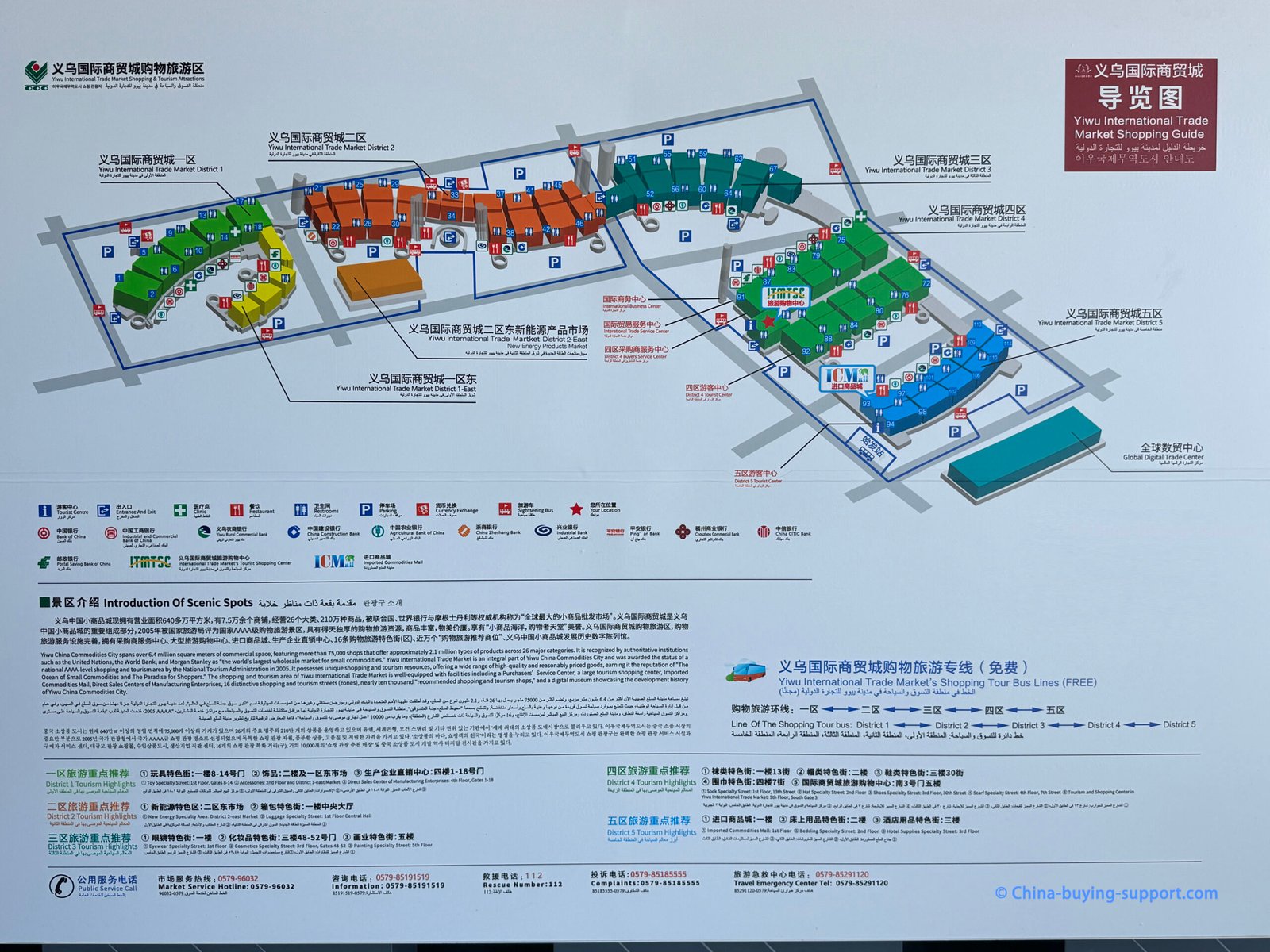
Yiwu Market – The World’s Largest Wholesale Market: If trade fairs are temporary, Yiwu International Trade City in Zhejiang is a permanent marketplace, sometimes described as a wholesale city. It has over 75,000 booths offering more than 2.1 million different products – from socks and school supplies to electronics and home décor. Yiwu is like an enormous daily trade fair open year-round (closed only around Chinese New Year and one-two weeks holidays). This “one-stop shop” lets you find thousands of suppliers under one roof, making it incredibly efficient for sourcing a broad range of small commodities in a single trip. You can literally fill a shipping container with assorted goods purchased in Yiwu! To get around Yiwu, it helps to hire a local sourcing agent or translator (English isn’t widely spoken at every stall). Take notes of booth numbers and negotiate volume prices on the spot.
Sourcing Agents: If you’re new to importing or want hands-off help, consider engaging a China sourcing agent. A good agent acts as your on-the-ground representative. They help vet suppliers, negotiate prices and MOQs, manage sampling, perform quality checks, and coordinate shipping. Sourcing agents leverage local expertise and networks, reducing the chance of scams or miscommunication. They can save you time by doing factory visits and handling the back-and-forth in Chinese. Of course, agents charge a fee or commission (typically a percentage of purchase). Always check an agent’s track record and clarify fees upfront. But for many importers, a reliable agent can streamline the entire process and reduce risk – especially if you plan to import at scale.
Tips for Vetting Suppliers: No matter how you find suppliers, always verify their credibility before placing an order. Here are some best practices:
- Check Business Credentials: Ask for copies of business licenses or certificates. Ensure the company name and address match what they’ve told you.
- Request Samples: Never place a bulk order sight-unseen. Order a sample or prototype to inspect the quality in person. This also tests the supplier’s responsiveness and reliability.
- References and Reviews: Look for online reviews or ask the supplier for references from other foreign buyers. Platforms like Alibaba have ratings and feedback – read those carefully.
- Communication Test: Check how well they communicate. Clear, prompt communication (in English or via an agent) is important for a smooth partnership. Miscommunication can signal future issues.
- Small Trial Order: If possible, start with a small trial order even if it’s below the usual minimum order quantity (MOQ). This lets you experience their process and quality with lower risk.
- Payment Terms: Be cautious with payment. Reputable suppliers often accept secure methods like Telegraphic Transfer (T/T) to a company bank account, or platforms’ escrow. If a supplier only insists on Western Union or personal accounts, consider it a red flag for scams.
Key Import Terms to Know: MOQ, Lead Time, FOB, EXW, PI and HS Code
Before you negotiate and place orders, it’s crucial to understand some common import/export terms you’ll encounter:
- MOQ (Minimum Order Quantity): The smallest quantity a supplier is willing to sell per order or per product. Chinese suppliers often have MOQs for production runs to be profitable. For example, a factory might set MOQ 500 units for a custom item. MOQ is usually negotiable – especially if you promise future orders or if the product is not customized. Be upfront about your required quantities and see if the supplier can accommodate or offer alternatives (sometimes a higher price per unit for lower quantity).
- Lead Time: This refers to how long production will take from order confirmation to completion, not including shipping. Lead times vary by product and order size – e.g., 15-30 days is common for many goods, but complex items or large orders could be 60 days or more. Always ask for an estimated lead time and build in some buffer for delays. Keep in mind holidays (like Chinese New Year) can extend lead times if your order overlaps those periods.
- Incoterms (FOB, EXW, CIF, DDP, etc.): Incoterms are standardized trade terms that define who is responsible for shipping costs, insurance, and risk at each stage of delivery. The most common ones when importing from China include:
- EXW (Ex Works): You (the buyer) take responsibility for pickup from the supplier’s door onward. The supplier just makes the goods available at their warehouse. You’ll handle all transport, export paperwork, and shipping costs from that point. EXW gives you maximum control but means more logistics work.
- FOB (Free on Board): The supplier handles getting the goods to the port of shipment (and through export customs) at their cost. Once the goods are on board the vessel (or plane), the risk and cost transfer to you. FOB [Port Name] is very common. For example, “FOB Shanghai” means the supplier covers transport to Shanghai port and export fees; you pay freight from Shanghai to your destination, plus import costs. FOB is often a good balance – suppliers in China are used to it.
- CIF (Cost, Insurance, Freight): The supplier’s price includes main ocean freight and insurance to your destination port. They handle export and sea transport; you take over at the arrival port. CIF simplifies things for the buyer during transit, though you’ll still handle import customs and trucking after port.
- DDP (Delivered Duty Paid): True door-to-door service – the supplier (or their forwarder) handles all shipping, insurance, and import customs clearance with duties paid, delivering to your door. You just receive the goods. DDP sounds convenient but it’s usually expensive; also not all Chinese suppliers can arrange DDP easily (they may quote via an express courier for small shipments). Still, for small e-commerce batches some buyers use DDP to avoid import hassle.
Why Incoterms Matter: Incoterms impact your total landed cost significantly. For instance, a price of $10/unit FOB China port means you still must pay ocean freight, import duty, and transport on top. But $12/unit DDP to your warehouse might include everything. Make sure you and your supplier clearly agree on incoterm in the proforma invoice or contract so there are no surprises about who pays for what. Beginners often start with FOB or CIF terms. With experience, you might prefer FOB plus arranging your own freight (often cheaper overall).
- Proforma Invoice (P/I): This is a preliminary invoice the supplier issues that outlines the sale details – product description, quantity, unit price, total value, incoterm, payment terms, and so on. Think of it as a quote in invoice format. You’ll use the proforma to arrange payment (e.g. a deposit) and it serves as a mutual confirmation of the order specs. Note: A proforma invoice is not a final commercial invoice and isn’t legally binding like a contract, but it’s an important document for clarity and for possibly initiating a letter of credit or import planning.
- HS Code (Harmonized System Code): An international 6-10 digits code that classifies your product for customs. Knowing the HS code is essential to determine import duty rates and any restrictions. For example, a stainless steel water bottle might have an HS code that tells customs its category and tariff. Ask your supplier for the HS code, or use your country’s online lookup tool to find it. Getting the code right ensures you pay the correct duties and comply with regulations.
Now that we have the terms down, let’s walk through the import process step-by-step – from sourcing and negotiation to shipping and customs clearance.
Step-by-Step Import Process from China
- Product Research and Sourcing: Start by selecting the right product to import. This sounds obvious, but product choice will determine your success. Research market demand and trends in your target market – use tools like Amazon Best Sellers or Google Trends to see what’s hot. Ensure the product isn’t prohibited or overly regulated (avoid items like weapons, certain chemicals, or anything illegal!). Choose something you can sell confidently and competitively. Once you know your product, find reliable suppliers using the methods discussed (online platforms, trade shows, Yiwu, or sourcing agents). Shortlist a few suppliers and compare quotes, MOQs, and capabilities.
- Supplier Negotiation and Sampling: After identifying potential suppliers, engage in negotiation. Key points to negotiate include price per unit, MOQ, production lead time, payment terms, and any customization. Don’t be afraid to negotiate – Chinese suppliers expect it as part of business. If their MOQ is too high, ask if they can lower it or do a trial order. When discussing price, ensure you’re comparing apples to apples with incoterms (e.g. a FOB price vs. an EXW price – FOB will be a bit higher but includes some local costs). Always request a sample before finalizing the order. Testing a sample lets you check quality and specifications in person. If the sample isn’t up to par, communicate adjustments or try another supplier. For custom-designed products, you might go through multiple sample iterations – factor in time for that. This sampling stage is crucial to avoid nasty surprises later.
- Place Your Order (Purchase Agreement): Once you’re satisfied with a supplier and sample, it’s time to place the order. The supplier will issue a Proforma Invoice listing all details: product specs, quantity, unit price, total cost, incoterm, and payment schedule (e.g. “30% deposit, 70% before shipment” is common). Review this carefully – it’s effectively your order contract. Make sure all details are correct: model numbers, materials, packaging requirements, and especially Incoterms and shipping method agreed. If you require custom packaging or labeling (say you need your logo on the product or specific carton markings), ensure it’s written in the P/I. At this stage, also negotiate payment terms if you haven’t already. Standard terms for new transactions are 30% down and 70% upon completion (before shipping) – this balances risk between parties. For larger orders or repeat business, you might get better terms (10% down, 90% on BL copy, or even net 30 days in rare cases). Confirm the production timeline and expected ship date as well. If timing is critical, build discounts or agreements into the order for delays.
- Payment and Production: With the order placed, you’ll send the initial payment (deposit). Use a safe channel – typically a bank wire (T/T) to the supplier’s company account. For smaller amounts, some suppliers accept Alipay, PayPal or Alibaba Trade Assurance (which can take credit cards) – those offer buyer protection but usually have fees. Never send money to a personal account; always to the registered company. Once deposit is received, the supplier will begin production. Stay in touch during production. It’s wise to schedule a mid-production update or inspection, especially for large orders. You could hire a third-party QC inspector to visit the factory when, say, 50% of goods are produced, to catch any quality issues early. Many sourcing agents will handle this if you’re using one. This step is about quality control – trust but verify that the manufacturing meets your specs.
- Quality Control (Pre-Shipment): When production is nearly finished, do a final inspection of the goods before you pay the balance and before shipment. You or your agent/inspector should verify: the product quality, functionality, dimensions, packaging, and count of units are all as ordered. Use an inspection checklist – for example, check that no items have defects or damage, packaging and labeling are correct, and quantities match the packing list. If any issues are found, resolve them with the supplier prior to shipment. This could mean reworking defective items or agreeing on a discount if the issue is minor and you can accept it. Never pay 100% or ship without ensuring the order is correct. It’s much harder to get remedies after the goods have left China. Once you’re satisfied, you’ll arrange the final payment (remaining 70% typically). Upon receiving full payment, the supplier will release the goods for shipping.
- Shipping and Logistics Arrangements: Now the focus shifts to getting your goods from China to your warehouse. You have multiple shipping options: ocean freight, air freight, international courier, or even rail (for Europe). The right method depends on your budget, volume, and urgency:
- Sea Freight: Best for large shipments (many cartons or full containers) that are not extremely time-sensitive. Sea freight is much cheaper per unit than air – you might pay a few thousand dollars for a 20-foot container that carries 10+ pallets of goods, which is a tiny cost per item. Transit is slow though: about 2–4 weeks by sea to most destinations (e.g. ~14 days to West Coast U.S., ~30 days to East Coast U.S. by ocean; around 4–6 weeks to Europe by sea, depending on the route). You’ll also need to account for port handling and inland trucking after the ship arrives. If you can plan inventory months ahead, sea freight offers huge savings.
- Air Freight: Ideal for urgent shipments or lighter goods where speed matters more than cost. Air cargo from China to the US or Europe usually takes 3–10 days total. But it’s expensive – often 5-10 times the cost of sea for equivalent weight/volume. Use air for high-value, low-volume products (e.g. electronics) or to meet a rush deadline. Sometimes importers split shipments – a small portion by air to meet immediate demand, and the rest by sea to stock for later.
- International Courier (Express): Services like DHL, UPS, FedEx are great for small shipments (samples, packages up to a few hundred kilos). They handle door-to-door delivery very quickly (often 3–5 days) and simplify customs for you by acting as broker. The downside is cost – express is the most expensive per kg. However, for Amazon FBA sellers or small online businesses, courier is a convenient way to start importing in small batches. Couriers also have the advantage of streamlined customs clearance (you’ll pay duties via the courier’s account and get an invoice later).
- Rail Freight: If you’re in Europe, there is a middle option – the China-Europe Railway. Trains run from Chinese hubs (like Zhengzhou, Chengdu, Yiwu) through Central Asia or Russia into Europe (Duisburg, Hamburg, etc.). Rail freight is faster than sea (around 2–3 weeks transit) and cheaper than air, though costs more than ocean. It’s suitable for medium urgency shipments to the EU. Not all logistics providers offer it, but it has grown popular for certain routes. Keep an eye on geopolitical factors though – rail routes can be subject to delays.
Most often, buyers will use sea freight for bulk and air or courier for small or urgent goods. Tip: Consider hiring a freight forwarder to manage the shipping process. A forwarder will handle booking space on a ship or plane, consolidation of your goods, export documentation, and can even manage customs clearance and inland delivery. They essentially act as your logistics partner, which is invaluable if you’re not familiar with shipping processes. Provide your forwarder with the supplier’s contact and pickup location once the goods are ready, and they’ll coordinate the rest. A good forwarder can also advise on optimal shipping methods and costs.
Before shipment, ensure all export paperwork and packaging is in order. The supplier should properly pack, label, and if required, palletize the goods for export. If shipping by sea, decide if you have enough volume for FCL (full container load) or will ship LCL (less than container load – shared container). The forwarder will help here. Also, insure your shipment. Cargo insurance is not expensive (usually a fraction of a percent of goods value) and covers losses or damage in transit – well worth the peace of mind.
Finally, plan for potential delays: production could run late, vessels can miss schedules, or customs might hold a shipment. Build some buffer into your timeline. As the saying goes, hope for the best but prepare for the worst when it comes to international logistics.
- Customs Clearance and Importing into Your Country: When your goods arrive in your country, they must clear customs. If you shipped by courier, this step is mostly handled for you (they will contact you for any needed info or payment of duties). For larger freight, you or your broker/freight forwarder will file the entry with customs. Key documents you’ll need to provide include:
- Commercial Invoice: The final invoice from the supplier, listing each product, its value, the country of origin, and the Incoterm. Customs uses this to assess the shipment’s value for duties.
- Packing List: A breakdown of what’s in the shipment – how many cartons, each carton’s contents, weights and dimensions. This helps customs verify the cargo.
- Bill of Lading (B/L) or Air Waybill: The transport document issued by the carrier. It confirms the goods were loaded and gives you title to them. An Ocean B/L is used for sea freight; Air Waybill for air shipments.
- Certificate of Origin (COO): Often issued by the exporter or a Chamber of Commerce, it states the country of manufacture of the goods. This can be important for applying any preferential trade agreement tariffs.
- Import Licenses or Permits: If your product is regulated (e.g. medical devices, certain chemicals, endangered species products), you may need special permits or licenses to import. Most consumer goods don’t require an import license in the U.S. or EU, but always double-check your country’s regulations.
- Customs Declaration Form: In many areas, an official import declaration is submitted. In the EU, it’s the Single Administrative Document (SAD) form; in the US, entry forms through the Automated Commercial Environment (ACE) are filed, typically by your customs broker.
It’s highly recommended to work with a licensed customs broker for clearance, unless you’re shipping via courier or have simple goods. The broker will ensure all paperwork is correctly filed and will calculate the duties/taxes for you. They can also help classify your goods with the proper HS codes if you’re unsure. Pro Tip: Prepare and submit all documentation before the shipment arrives to avoid delays. If everything is in order and duties are paid, customs release is usually quick. If customs decides to inspect your shipment (either document check or physical exam), it may take extra days – another reason to keep your paperwork thorough and compliant.
Once duties are paid and the goods are cleared, you (or your transport agent) can pick up the shipment from the port/airport or it will be delivered if you arranged that. Congrats – your goods have officially been imported!
- Post-Import – Receiving and Quality Assurance: After you get your shipment, immediately inspect the goods at your warehouse. Even though you (hopefully) did a pre-shipment QC, it’s wise to verify that no damage occurred in transit and that the quantity received matches what was shipped. Check for any transit damage, missing cartons, or other issues. If you discover problems, document them with photos and inform your supplier quickly. Good suppliers will often work with you on a solution (replacement or partial refund) if there was a mistake on their end. However, if everything looks good, notify the supplier that the shipment was received in good condition and thank them – maintaining a good relationship can set the stage for your next order.
You’ll then integrate the goods into your inventory system, fulfill orders if you’re selling direct, or send stock to Amazon FBA or retail locations as needed.
Finally, take time to evaluate the overall import process. Review the costs to see if your estimates were accurate (landed cost, duties, freight) and identify any improvements for next time. Also evaluate the supplier’s performance: Did they meet quality expectations? Was the timeline as promised? This analysis will help optimize future imports. Importing is a learning process – each shipment will teach you how to do it better and scale up.
Import Duties and VAT: US vs. EU (Late 2025)
When importing, you must budget for customs duties (tariffs) and, in many countries, import taxes like VAT/GST. These charges can significantly affect your costs, so let’s look at how it works in the United States and European Union – two of the biggest markets – as of late 2025.
United States (Customs Duties): The U.S. imposes import duties based on the HTS code (Harmonized Tariff Schedule classification) of the product and its country of origin. Duty rates in the U.S. vary widely: from 0% on some products up to about 37.5% on others, with most everyday consumer goods falling in the single-digit range. The U.S. does not charge an import VAT or federal sales tax on imports – only duties and a few special fees for customs processing.
However, due to the U.S.-China trade tensions that began in 2018, many Chinese-origin goods currently face additional tariffs on top of the normal duty. These are often called Section 301 tariffs (trade enforcement tariffs). As of 2025, typical additional rates are 25% for certain products (Lists 1–3, covering many industrial and tech goods) and 7.5% for others (List 4A, which includes a lot of consumer goods like apparel, footwear, home goods). For example, if your product’s base duty is 5% and it’s on List 4A, you’d pay a total 12.5% duty (5% + 7.5%) when importing from China. These tariffs have been a moving target – there have been negotiations and some easing of tensions recently. In fact, 2025 saw steps to reduce certain surcharges (e.g. an extra “fentanyl” tariff on Chinese goods was cut from 20% to 10% in November 2025 as relations improved). Still, the additional China tariffs remain in effect on many categories. It’s crucial for importers to check the latest tariff schedule by HTS code for your specific product, since rates can change with policy updates. The Harmonized Tariff Schedule (via the USITC or U.S. Customs CBP website) will list the current duty rate and any applicable 301 tariff for your item.
The US also had a long-standing de minimis rule (duty-free threshold) where shipments valued under $800 typically entered duty-free. Note that recent policy shifts are narrowing those exemptions (as of Aug 2025, most shipments regardless of value may now be subject to duties due to regulatory changes). But for commercial imports, you should assume duties will apply in any case. The table below provides rough duty ranges for common product categories imported from China into the U.S., alongside a comparison to EU import charges:
European Union (Import Duty & VAT): The EU’s tariff system also assigns duties by HS code (often referred to as the TARIC in EU). The EU’s Common External Tariff is applied uniformly across all member states, so the duty rate will be the same whether your goods enter Germany or Spain. EU duty rates on consumer products are generally a bit more straightforward and often lower on average than US tariffs (excluding the U.S. special China additional tariffs). Additionally, the EU charges Import VAT on goods at the point of import, which is essentially the same as the normal VAT but applied to imports. Each EU country has its own VAT rate (usually 20–25% for standard rate; e.g. 20% in the UK or France, 19% Germany, 23% in Spain, etc.). This VAT is calculated on the CIF value + duty of the goods. Businesses can typically reclaim this import VAT later if they are VAT-registered, but it can affect cash flow.
Below is a comparison table summarizing typical import duty and tax rates for the US and EU on some general product categories (note: actual rates will vary by specific product and HS code, so use this as a rough guide and always verify):
| Product Category | US Import Duty (from China) | EU Import Duty (Common External Tariff) | EU Import VAT (varies by country) |
|---|---|---|---|
| Apparel (Clothing) | High: Generally 10%–20% for most clothing; can be up to 30%+ for certain garments. Plus 7.5% Section 301 on apparel from China. | Moderate: Typically around 12% for many garments (varies by material, e.g. 6.5% to 12% range). No extra China-specific tariff in EU. | VAT ~20% (on CIF + duty). E.g. importing $1,000 of clothing into EU at 12% duty incurs ~$120 duty, then ~$224 VAT (assuming 20%). |
| Consumer Electronics (phones, laptops, etc) | Low: Many electronics are 0% duty under ITA (e.g. laptops, phones) or a few percent (2–5%) for others. Some items face 25% Section 301 if classified under those tariff lines (mostly components); finished consumer electronics often on 7.5% list or exempt. | Low: 0% to 5% for most electronics. Many tech products enter duty-free in the EU as well (e.g. computers, certain devices). | VAT ~20%. Electronics usually incur VAT on import, but duty might be zero – e.g. a $1,000 laptop would pay $0 duty, $200 VAT (if 20%). |
| Toys & Games | Low: 0% duty on many toys (US HTS 9503 items are often duty-free). Some specific toys/games up to ~5% duty. (Toys from China were on 7.5% Section 301 list, but some were later exempted; many toys effectively 0%.) | Low: 0–4.7% duty for most toys, and many toys are 0% duty in EU. For example, basic toys, puzzles, etc., often tariff-free or 4.7% at most. | VAT ~20%. Kids’ toys would have VAT on import; e.g. $1,000 worth of toys at 0% duty → $0 duty, $200 VAT. (Some EU countries have reduced VAT on children’s products, but usually still applied at import then refunded accordingly.) |
| Home Goods (Furniture, Kitchenware, etc) | Moderate: 0–10% duty for many home goods. E.g. wooden furniture ~0–1%; plastic household items ~5–6%; textiles (linens) ~10–15%. (Section 301: many household items on 7.5% list in US, so add 7.5% extra in those cases.) | Low–Moderate: Often 5%–12% depending on the item. Furniture commonly ~5–6%; housewares around 5–8%; home textiles around 8–12%. | VAT ~20%. All these goods incur VAT at import. |
* if you are reviewing this comparison table via a mobile phone and the table doesn’t display completely, simply swipe the table to the right to see the rest.
Notes: The above are sample ranges. Always verify the exact HS code tariffs. The EU import VAT is effectively the same as domestic VAT – if you’re VAT-registered, you’ll generally be able to reclaim it, but you must pay it at customs first. In the U.S., there’s no VAT, but individual states may charge sales tax when goods are sold to end customers (not at import). US customs does not collect state taxes on imports; those are handled in retail transactions separately.
As of late 2025, it’s worth noting that the US-China “trade war” tariffs have seen some easing, but are not gone. A mid-2025 agreement led to some reductions in surcharges (for instance, certain tariff increases were paused or lowered). But still, many categories still carry the extra 7.5% or 25% duties. Importers should stay alert to policy changes – trade relations can change with new negotiations or administrations. Always check current tariff schedules (the U.S. Harmonized Tariff Schedule and the EU TARIC database) using your product’s HS code to get the latest duty rates and any special tariffs. Government websites and portals like the EU’s Access2Markets are excellent resources. When in doubt, consult a customs broker or trade compliance expert to avoid surprises on import costs.
Risks and How to Avoid Scams
Importing from China can be a good way to make money, but it’s not without risks. Being thousands of miles away from your supplier, often dealing over the internet, opens the door to potential fraud or misunderstandings. Here are some common risks and how to mitigate them:
- Scams and Fraudulent “Suppliers”: Unfortunately, there are scammers posing as manufacturers – they might disappear after receiving payment or ship fake/counterfeit products. To avoid scams, thoroughly verify your suppliers. Use the tips mentioned earlier: verify business licenses, use platforms that offer escrow or trade assurance for the first deal, and start with small orders. If a deal sounds too good to be true (e.g. brand-name electronics at a fraction of market price), be extremely cautious – they could be counterfeit or non-existent goods. Consider using a supplier verification service or hiring a local inspector to confirm the company’s existence before transferring large sums.
- Quality Risks: Even legitimate suppliers can have quality fade or mistakes in production. Without oversight, you might receive subpar goods. Always do pre-shipment inspections (either yourself or via a third-party QC, or if you have a sourcing agent, they will do that for you). Clearly document quality requirements in your order contract (even small details like materials, dimensions, allowable error). This gives you a way to fix the problem if the goods don’t meet specs. Building a relationship with suppliers over multiple orders can improve trust and consistency. If quality issues recur, be ready to switch suppliers – it’s better to find a reliable partner than repeatedly fix defects.
- Payment Risks: The typical payment model (30/70) means you still owe a lot of money before seeing the final goods. To protect yourself, never pay the full balance until you’ve done an inspection and are satisfied. If a supplier pressures full payment before shipment without an established history, that’s a red flag. For very large orders, you could explore a Letter of Credit (LC) which offers more protection by involving a bank, though most small medium enterprise importers find LCs involve too much red tape unless dealing in the hundreds of thousands of dollars. Sticking to reputable payment channels (bank transfers to company accounts, Alibaba Assurance, etc.) also reduces risk.
- Intellectual Property (IP) and Compliance Risks: Ensure the products you import don’t violate any IP rights (trademarks, patents) in your country. Importing fake branded goods can lead to seizures and legal trouble – plus it harms your business reputation. Additionally, check product compliance requirements: for example, electronics may need FCC certification in the U.S. or CE marking in Europe; toys need to meet safety standards and EN71, etc. If your goods aren’t compliant, they could be denied entry or recalled. You can reduce this risk by researching regulations for your product and having the supplier provide necessary certificates or test reports. Working with suppliers who have prior experience exporting to your market is extremely helpful on compliance.
- Logistics and Customs Risks: Shipping internationally involves handling and potential rough conditions. Package your goods well (ensure the supplier uses good export cartons, palletizing, and perhaps moisture protection for paper products when sea freight). Also, incomplete paperwork can lead to customs delays or fines. Avoid this by being thorough with documentation (as covered above) and possibly using a customs broker. Keep informed about any import restrictions (anti-dumping duties, quotas, sanctions on certain goods, etc.) that might affect your shipment – these are not common for typical consumer goods, but it’s good practice to stay informed via official trade notices.
In short, due diligence at every step is your best defense: vet suppliers, specify everything in writing, inspect goods, and follow regulations. Thousands of companies successfully import from China, and with careful attention, you can too – while minimizing headaches and surprises.
Kevin’s Summary on Importing from China
Importing from China may seem complex at first, but with the right knowledge and preparation, it can be incredibly rewarding. You now have a comprehensive overview of the process – from sourcing and negotiation to shipping, customs, and delivering products to your doorstep. We’ve covered why China is such a popular sourcing destination, how to find and vet suppliers (online and offline through markets like Yiwu or trade fairs), key terms like FOB and MOQ, the step-by-step journey of an order, and the core details of duties and taxes in major markets.
Remember that success in importing often comes from building relationships and continuously learning. Start small, learn the ropes, and gradually scale up. Always keep an eye on the details – a missed document or mis-communicated spec can cause some troubles later. But don’t let it discourage you: millions of small businesses have navigated this path and built thriving product lines thanks to Chinese suppliers. With this guide as a reference, you’re well-equipped to join their ranks.
Good luck with your importing journey – with preparation and due diligence, you’ll turn global sourcing into a powerful advantage for your business. Happy importing!
If you have any questions about Importing from Yiwu Market or China, or if you’d like professional assistance to make your buying process easier, we’re here for you. Feel free to reach out – whether you need a trustworthy agent on the ground, guidance on shipping options, or just someone to talk through your product ideas with, we’re happy to help. Sourcing can be complex, but you don’t have to do it alone. Contact us anytime for friendly advice or support on making your China sourcing and importing journey a smooth success.
Contact Information as below:
Email:kevin@china-buying-support.com
Phone | WhatsApp:+86 1860 5899 103
Thank you.
Joining Us With 1,200+ Happy Clients Enjoying Buying From China now!
Becoming One of China-Buying-Support family to Get a Easier and Trouble-Free Sourcing and Shipping Service.