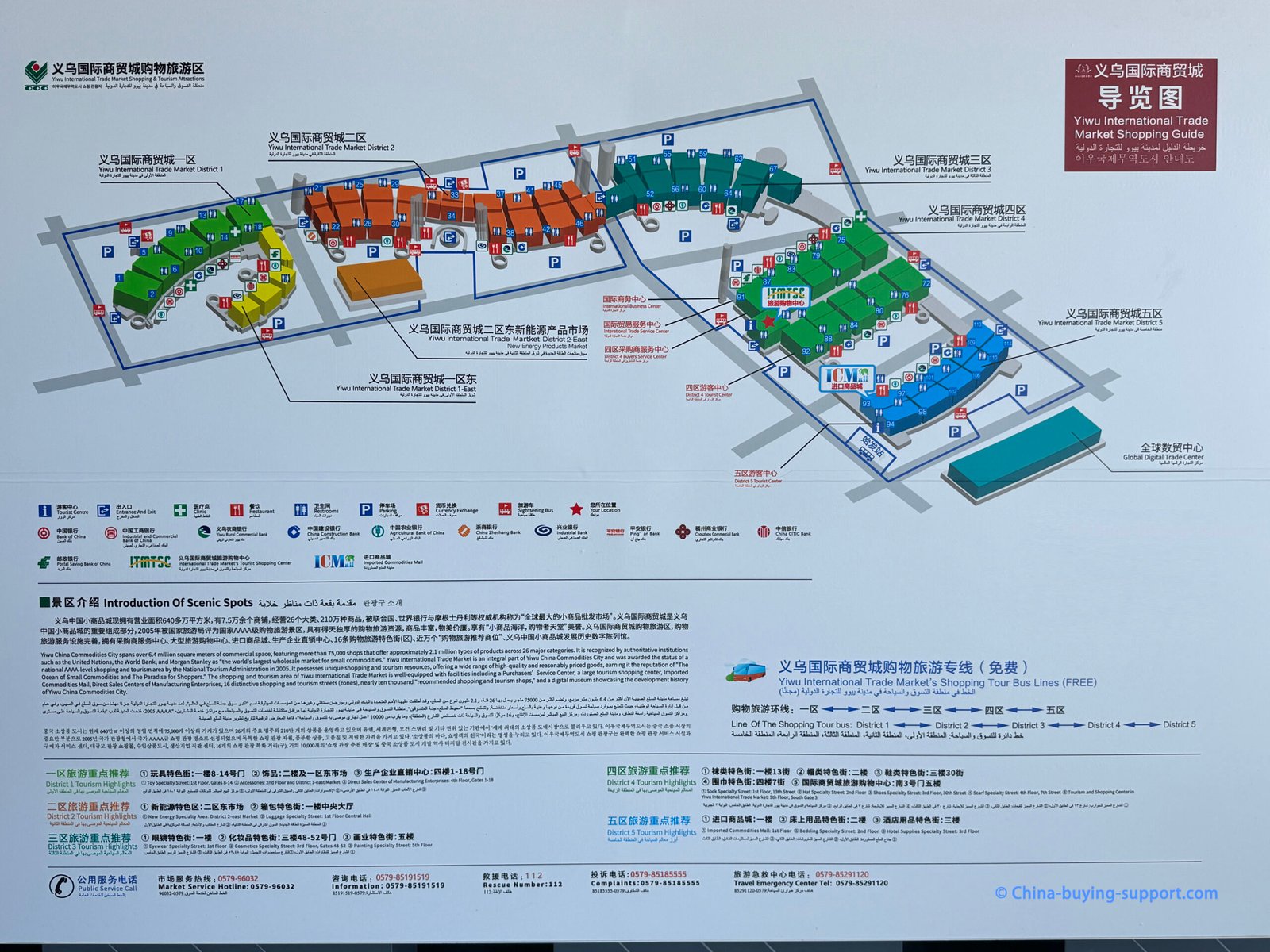

First Time in Yiwu Jewelry Market? Here’s Exactly How to Buy Jewelry
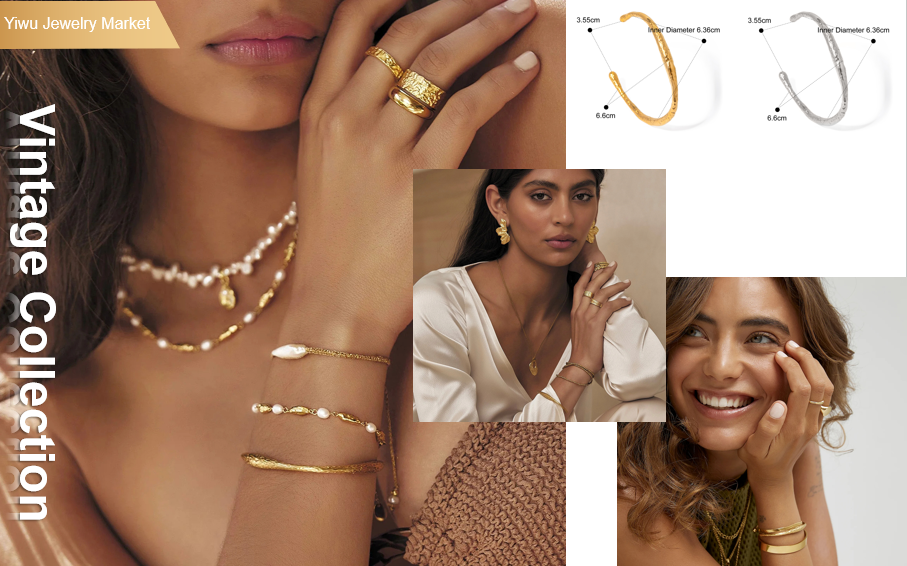
Vintage Collection: layered pearl necklaces, stacking rings, and gold/silver open cuff bangles, designs from Yiwu Jewelry Market
How to Buy Jewelry from Yiwu Market
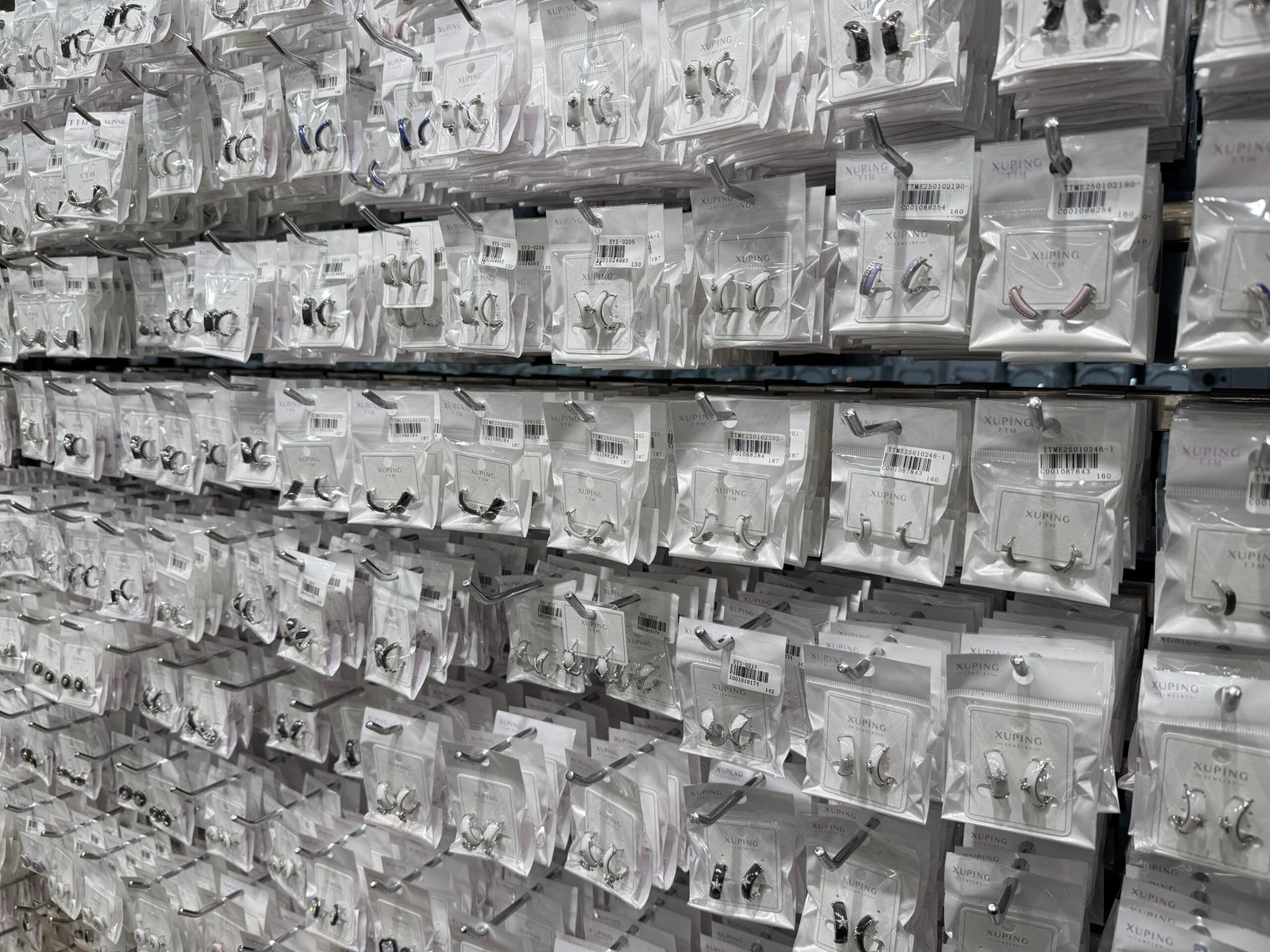
Packaged XUPING hoops and ear cuffs—easy for wholesalers to pick and pack in Yiwu jewelry market.
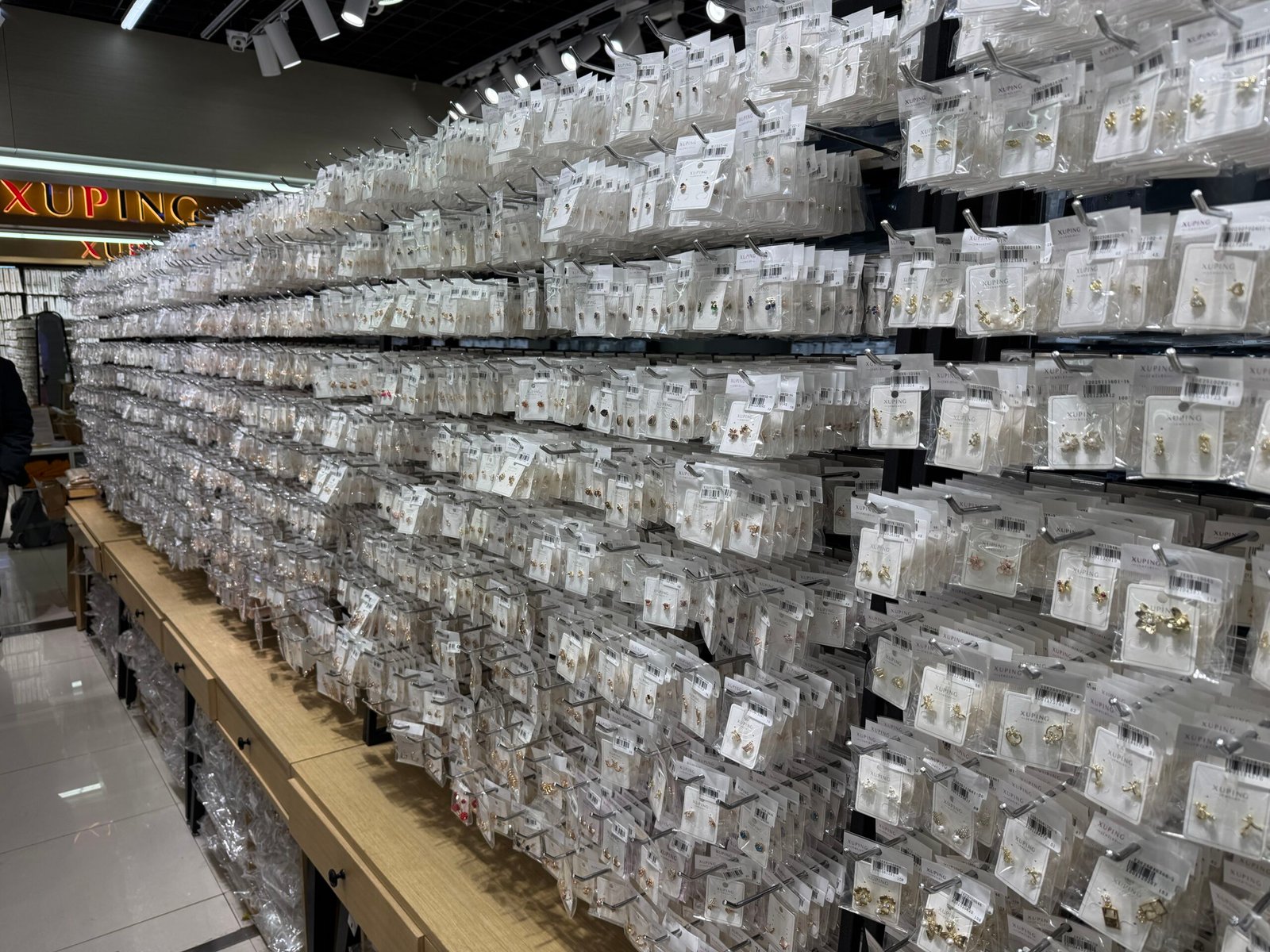
Wholesale earrings displayed in packed, ready-to-sell assortments at Yiwu Jewelry Market.
There are a few ways to source jewelry from Yiwu, depending on your ability to travel and your business needs. Below we outline the common methods and give tips to make your buying process smooth and successful.
-
Visiting Yiwu in Person
If possible, going to Yiwu and visiting the market in person is an invaluable experience. Being on the ground allows you to see and touch the products, compare many suppliers quickly, and build relationships.
Pros of visiting: You can personally inspect quality, pick out the exact designs you like, and negotiate face-to-face. You’ll likely discover interesting products you might not have found online. It’s also easier to communicate your requirements when you’re right here with the product in hand. Many buyers who plan to purchase large quantities or a wide variety of items prefer to make a trip to Yiwu. It can be worth it even for smaller businesses if you want that firsthand assurance of what you’re buying.
Tips for Yiwu Jewelry Market visits:
- Plan Ahead: The Yiwu Jewelry Market is huge. Before you go, do some homework on what styles or items you’re seeking. Having a rough idea of your target products will make your search more focused and efficient. Otherwise, it’s like looking for a needle in a haystack given that the overwhelming selection. Note down any particular trends or keywords (e.g. “turquoise boho necklaces” or “stainless steel men’s rings”) so you can ask around.
- Give Yourself Time: As mentioned, allocate at least a full day or two for the jewelry floor if you want a thorough look. It’s tempting to rush, but walking slowly and scanning each booth is key – you never know where a gem (figuratively speaking) might appear. The market is generally open until 5pm; mornings tend to be a bit quieter, afternoons busier.
- Comfort is Key: Wear comfortable clothes and shoes. You’ll be on your feet all day and possibly carrying catalogs or samples. Bring a rolling suitcase or large tote bag to hold brochures or sample purchases (many buyers bring a small luggage to the market to avoid carrying weight on their shoulders). Also, keep a bottle of water and maybe some snacks – there are cafes in the Trade City, but you might not want to break too long when you’re in the sourcing groove.
- Communication: When you find a booth with items you like, feel free to step in and start a conversation. Greet the seller (they are used to foreign buyers; a simple “Hello” or nod and then pointing at items works too). Ask about price: “How much?” will do; they’ll usually type the price on a calculator to show you or say it in English. For example, they might say “2 dollar” or “15 RMB” etc.
Most vendors speak enough English for basic transactions, but if deeper discussion is needed (custom orders, etc.), use simple terms or translation apps, or have an interpreter. If you have many items and complex requirements, consider hiring a local guide/translator for the day – it can be very helpful.
- Sampling and Photos: Don’t expect suppliers to hand out free samples readily; this is wholesale market, not a trade show, so they usually don’t give items for free unless you have a large order pending. If you want a sample piece, you should be prepared to pay for it (often at slightly above wholesale price, which is fair). For taking photos: many booths have “No Photos” signs because they worry about design copying. Always ask permission before photographing a product. Often, if you show genuine interest and talk a bit, the seller will allow you to take pictures of the items you are considering – especially if it’s for remembering your selection.A tip: build a bit of rapport first, then politely ask if you can snap a photo for reference. Once they see you’re a serious buyer, 9 out of 10 times you can get permission to take the photos you need. If someone refuses, respect it – you can always take notes or ask for a catalog.
- Negotiating & Ordering: When you’ve decided to order, you’ll discuss specifics like quantity per design, any customizations, and payment terms. In Yiwu market, prices are usually fairly fixed for small MOQ orders, but for large volumes you can negotiate. You might say “If I take 500 pieces, can you do $0.40 instead of $0.45?” – it never hurts to ask. The vendor might counter with something in between. Remember, suppliers in this market negotiate daily, so it’s expected. Be reasonable and polite. Once you agree, you will likely pay a deposit (commonly 30%) if it’s a production order, or full payment if it’s ready stock you’re buying on the spot. Many vendors accept cash (RMB or USD), and increasing numbers can take electronic payments (Alipay/WeChat for RMB, some suppliers even have credit card terminals, or they may ask you to wire transfer the balance later). Clarify the lead time if products need to be made – typically jewelry items take 2–4 weeks. Get a business card and a written order or invoice detailing what you ordered and the terms, and take a photo of your order invoice just for recording and easily find it out when you back hotel/home.
- Using an Agent While in Yiwu Jewelry Market: If you find it overwhelming to manage everything yourself during the visit, you can hire a Yiwu market sourcing agent to accompany you. Many agents offer a service where they take you around, help translate and negotiate, keep track of your orders, and later handle consolidation and shipping. They usually charge a fee or percentage but can make the process smoother – especially if it is your first time.
Visiting Yiwu Jewelry Market can be an eye-opening and productive trip. Many experienced buyers visit at least once a year to catch new trends and place orders, then reorder remotely in between. However, not everyone can travel to China, so luckily there are other ways to buy from Yiwu…
-
Using a Yiwu Sourcing Agent (Buy Remotely with Help)
If a trip to China isn’t feasible, the next best thing (and very common practice) is to work with a Yiwu-based sourcing agent. These are companies or individuals in Yiwu who act on your behalf to source products, negotiate, do quality checks, and arrange shipping. In fact, given that the language and logistics challenges, many first-time importers prefer using an agent.
How an agent can help: You would typically give them an idea of what you want (product styles, budget, etc.). They will go to the market to find suitable suppliers, send you product photos/quotes, and you choose the ones you like. They then place the orders for you, ensure the goods are produced as expected, collect everything in their warehouse, inspect for quality, and ship it to you. Agents often handle price negotiation, quality control, consolidation of goods, and customs paperwork. Essentially, they are your feet on the ground in Yiwu.
For example, an agent might video-call you from the market, showing you booths of necklaces if that’s your focus, or they might send you catalogs. Some jewelry suppliers have websites or offices where they display popular items. Good agents also help ensure you’re not overpaying and that you get the products as described – they act in your interest since you are their client, not the factories.
Finding an agent: Many Yiwu agents advertise online. Look for a reputable agent with good reviews, who speaks your language, and is responsive. They will typically charge a service fee (commonly 4-10% of your purchase value, depending on how big your order is – larger orders often get lower percentage fees). Some agents also have minimum order requirements (e.g., minimum $500 total order) to make it worth their while.
Using an agent is highly recommended if you’re new to Yiwu or if you have a complex sourcing list. They can save you a lot of time and help avoid mistakes. It’s especially recommended for first-time buyers unfamiliar with the market. A good agent will essentially guide you through the entire process from sourcing to shipping, like a partner.
-
Ordering Jewelries Online or Through Supplier Websites
Another way to buy from Yiwu is to source online – many Yiwu suppliers are active on platforms like Alibaba, Made-in-China, or Yiwu Go (Yiwugo). Yiwugo is actually an official online platform for Yiwu market where some vendors list their products. If you can identify suppliers via these platforms, you might place orders directly.
Some tips if going this route:
- Use Product Directories: Alibaba has countless listings for fashion jewelry. You can filter by location (set it to Yiwu or Jinhua region) to find suppliers likely in Yiwu. However, keep in mind some Yiwu vendors may not be highly active online or their listings could be limited. Still, it’s a starting point. Made-in-China and Globalsources are similar platforms where Yiwu companies exhibit.
- WeChat & WhatsApp: Often once you find a supplier (either from a trade show, online, or referral), they will communicate via WeChat or WhatsApp. Chinese suppliers love WeChat – it’s their primary business communication tool. Don’t be surprised if they want to send photos and quotes over a messaging app. It’s a convenient way to keep in touch, get updates on new arrivals, etc. If you can’t visit, you might develop a relationship with a few suppliers and simply reorder via chat when you need stock (they’ll send you pictures of new designs, you pick, they ship – it can work quite well if trust is built).
- Yiwu Wholesale Websites: There are some websites (like Yiwugo.com, or even some suppliers’ own sites) where you can see jewelry catalogs. It might not be as advanced as say Amazon, but you can often place an order remotely. Be prepared to handle international payment (usually by bank transfer, or PayPal/western union for smaller sums, sometimes credit card if they have an online payment link).
- Combine Orders & Warehouse: If you’re dealing directly with multiple jewelry suppliers, you’ll need to coordinate shipping. One approach is to have each supplier send the goods to a local Yiwu warehouse or freight forwarder’s warehouse, then combine everything into one shipment to you. Some big freight forwarders in Yiwu offer consolidation services – you give all your suppliers the address of the forwarder’s warehouse, they deliver there (often free within Yiwu city but goods value must meet suppliers’MOQ). The forwarder then packs everything together and ships to you via your chosen method. This way, you avoid paying separate international shipping for each little batch. Many sourcing agents also offer this as part of their service (warehousing multiple orders and consolidating).
One thing to be cautious about when ordering sight-unseen: quality validation. If you haven’t seen samples, you are trusting that the supplier will deliver the quality as listed. Always try to get samples first or start with a smaller order to test reliability. Inspect upon arrival and give feedback for future orders. Some buyers do a small trial order directly, and if it goes well, they stick with that supplier for larger orders. Others prefer using an agent to double-check the jewelry goods before they’re shipped out (agents will usually do an inspection and can send you photos or videos of the final products).
-
Ensure Product Compliance and Quality
Regardless of how you buy jewelries (in person or remotely), there are some general best practices:
- Check Jewelry Samples/Production: If you placed an jewelry order that involves manufacturing (not just off-the-shelf purchase), try to get production samples or at least approval photos. For instance, if you ordered a custom logo on the jewelry, ask them to send a photo of one finished piece before they produce all – to make sure the logo is correct. If plating color is critical (gold tone can vary), confirm it. Many Yiwu suppliers will proactively do this, but it never hurts to request. As one tip said: a careful sample check is vital – not just style, but quality and workmanship – and communicate any issues to ensure they fix them in mass production.
- Quality Control: If you’re here in person, inspect the goods with the supplier before shipping or have your agent do it. Common things to watch for: Are the metal coatings consistent? Any missing stones? Do clasps and hooks function properly? In large batches there can be a small defect rate; Yiwu suppliers might not have strict QC for very cheap items unless you insist. If you find a problem, point it out and have them replace or fix it. For example, if 5 out of 100 necklaces have faulty clasps, they should swap those out. It’s easier to handle this on-site than after shipping. If issues are only found later, a good supplier will often give credit or replacements in your next order if you report it, but that’s a hassle. So try to catch any issues early. For bigger operations, you could even hire a third-party inspection service in Yiwu, but for most cases, an agent’s check or your own check suffices.
- Know Import Regulations: This is important – make sure the jewelry you import meets your country’s regulations. Different countries have rules about lead content, nickel release, cadmium in jewelry, etc. For example, California’s Proposition 65 requires that products (including fashion jewelry) meet certain lead and phthalate limits and be properly labeled if they don’t. The EU has strict nickel release standards for earrings and such. If you are importing to markets like the U.S. or EU, you might need the supplier to use lead-free and nickel-free materials. Yiwu vendors can supply compliant products (some specifically advertise lead/nickel free), but you must specify it and possibly pay a bit more. Always ask if they can meet the standard and maybe get a test report if you’re dealing with large quantities. Many big importers will send random samples to labs for testing. While this is a deep topic, the key point is: do your homework on safety regulations for jewelry in your target market and communicate those requirements. It’s the importer’s responsibility to ensure compliance. For example, if selling in California, you might have to label items with Prop 65 warnings if they contain certain chemicals above thresholds. So, it would be better to source compliant jewelry items from the start if possible.
- Payment Safety: If you are not using an agent and paying suppliers directly, use safe payment methods. For initial orders, platforms like Alibaba Trade Assurance or PayPal (for small amounts) offer some protection. Bank transfers (T/T) are standard for larger sums but try to verify the company’s legitimacy (Alibaba Gold Supplier status, references, etc.). Fortunately, in Yiwu, because many suppliers rely on repeated business, outright fraud is less common. The bigger risk is more about quality or spec issues than not sending anything at all. Still, always be cautious and keep documentation of orders and payments.
Now that you’ve ordered your jewelry, the next step is getting it home. Let’s look at shipping options and logistics for Yiwu purchases.
Shipping and Logistics for Yiwu Jewelry Orders
Jewelry has a great advantage when it comes to shipping: small volume, high value. This means you can ship by faster methods without breaking the bank, since the jewelry items don’t take up much space. Here are the main shipping methods to consider, along with pros and cons for jewelry:
- Express Courier (DHL, FedEx, UPS, TNT): This is the fastest option. Express shipping from China to most countries is usually 3–7 days door-to-door. It’s excellent for smaller shipments (a few boxes up to maybe a couple of hundred kilograms). For jewelry, which is compact, you can often fit a large order in a few cartons, making express a convenient choice. The cost is higher per kilogram than freight, but because jewelry’s value is high relative to weight, it’s often worth it. For example, shipping 50 kg by DHL might cost a few hundred dollars – which could be feasible if that 50 kg contains thousands of dollars worth of jewelry. Use express for small orders or when you need stock quickly. It’s hassle-free as the courier handles customs clearance typically and delivers to your door. Many Yiwu suppliers can arrange DHL pickup and just charge you the fee, or you can use your own DHL/FedEx account.
- Air Freight (Cargo): If your shipment is a bit larger (say hundreds of kilograms or over 1 cubic meter of volume) but you still want it faster than sea, air freight is an option. This is different from express – your goods go as cargo on a plane to your nearest airport, and you (or your freight agent) handle customs and trucking from there. Transit times are usually around 5–10 days. Air freight is cheaper than express courier per kilogram (especially beyond ~100 kgs), but it comes with more complexity: you’ll need to deal with customs clearance or hire a broker. For jewelry, ensure you have the proper documentation (commercial invoice, packing list and certificates if needed) and be ready to pay any import duties or taxes on arrival. Air freight is best for medium-sized shipments where time is a factor but you can’t justify the cost of express on every kilo.
- Sea Freight: If you are shipping very large volumes or heavy goods, sea freight is the economical choice. You can ship as LCL (Less than Container Load) if you don’t have enough to fill a full container, or FCL (Full Container Load) if you do. Sea shipping is by far the cheapest per unit weight/volume, but it’s much slower – typically 3–6 weeks in transit, plus extra time for consolidation and customs. For jewelry, many buyers actually avoid sea unless they have to, simply because the goods are small enough that air/express is cost-effective. However, if you, for example, ended up with a multi-ton bulk buy (maybe including displays or other heavier items), you could use sea freight to ship it. Yiwu is inland, but well-connected to Ningbo/Shanghai ports. Your goods would likely go by truck to the port then sail out. Sea freight is a perfect method for very large orders to bring costs way down, but for most jewelry importers, only use it if the shipment is big and not time-sensitive. Note: Sea freight also incurs destination port charges and requires customs clearance by you or your broker.
- China Post / EMS / E-Packet: For very small shipments (samples or tiny orders), postal services can be a low-cost option. China’s postal service (often branded as EMS for international, or ePacket for small parcels) can ship packages under 2kg (ePacket) or larger via EMS. This is cheaper than DHL but much slower (2–4 weeks or more) and with limited tracking. It’s an option if you’re in no rush and want the absolute cheapest way for a small box. For instance, mailing a 5kg box of jewelry might cost far less than DHL – but you wait possibly a month. Many sellers prefer express for reliability, but postal is there if needed. Keep in mind, postal packages still go through customs; if the jewelry total value is high, it may not be the best method as customs might hold it for inspection more readily than a courier that pre-clears.
For most importers of jewelry, express courier or air freight tends to be the sweet spot: quick and relatively affordable given that jewelry is high-value, low-bulk commodity. It’s not uncommon for buyers to ship, say, 3 cartons via DHL and have their entire season’s collection in hand within a week of production finishing.
Customs and import duties: Jewelry can attract import duties, which vary by country and material. Many fashion jewelry items (imitation jewelry) have low duty rates in places like the US (often around 4-9%) but can be higher in some regions. Sterling silver jewelry, if not plated with precious metal, might have different codes than base metal costume jewelry.
Always ask your sourcing agent for the HS code of the items, or check with your customs broker, so you know what tax rate to expect. For example, the HS code for imitation jewelry is typically 7117.90 in many jurisdictions, whereas silver jewelry is 7113.11 (just as an example of how they differ). If you import a big shipment, you’ll need to classify the goods correctly on import documents.
Also be aware of any restrictions: some countries might require hallmarking for precious metal jewelry (e.g., in some places, silver needs a .925 stamp – which most Yiwu silver will have, but do check). If you’re importing anything that might be considered fine jewelry (with precious stones or metals), additional rules could apply like import licenses or responsibilities under the Kimberley Process (for diamonds) – but likely not relevant for Yiwu goods as those are mostly faux or low-karat.
One more note: insurance. Consider insuring your shipment, especially high-value jewelry, in case of loss. Express companies often include minimal insurance by default (e.g. $100) unless you declare higher value. You can usually purchase insurance through your shipper or a third party to cover the invoice value. Given jewelry’s small size, theft is very rare in transit (especially using DHL/FedEx if it’s not obvious what it is), but it’s wise to be covered for any mishaps.
Packaging for shipping: Yiwu suppliers will pack the jewelry according to your instructions. If you don’t tell them otherwise, they typically polybag or card each piece (many come on simple cards or in OPP plastic bags), then bulk pack in cartons. Jewelry being small, you want to ensure cartons are strong and well-sealed (which they usually are). If you have fragile items (like mirror compacts or anything that can break), tell the supplier to add extra padding. But for most jewelry, the risk is only tangling or scratching; having them individually bagged or carded prevents that.
Finally, if you consolidated multiple suppliers’ goods, make sure the shipping marks/labels are clear so nothing gets lost. Your agent or freight forwarder will help label cartons. Also, prepare a detailed packing list and invoice for customs – listing the general description (e.g., “Fashion jewelry – necklaces, earrings, hair accessories… made of base metal, not real gold/silver” etc.), quantity, and value. Good documentation smooths customs clearance.
To sum up shipping: you have many options – fast or slow, cheap or premium – and because jewelry shipments are relatively compact, you have flexibility. Many buyers start with express for the first batches (to get products ASAP) and as they scale up, explore air freight or a mix of methods to optimize cost and speed.
Yiwu Jewelry Market vs. Other Jewelry Hubs in China
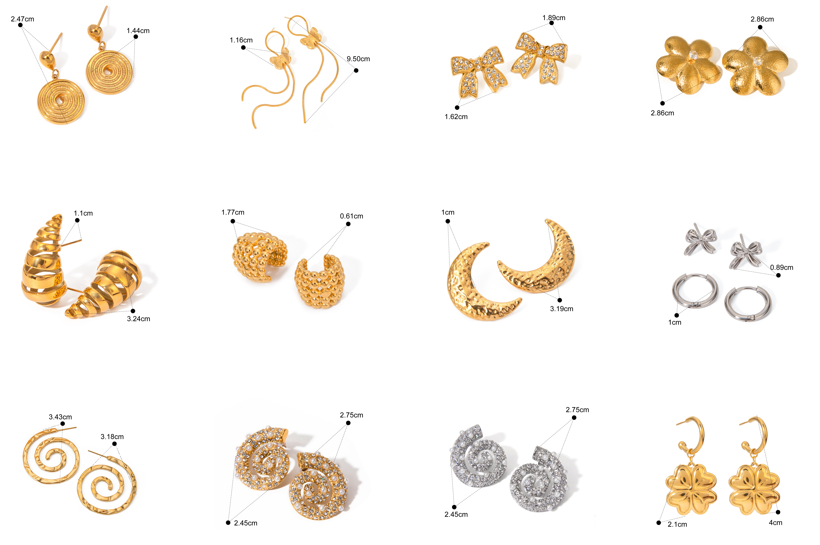
Assorted gold and silver earrings —spiral, bow, flower, crescent hoop, ear cuff, and threader styles. Designs from Yiwu Jewelry Market
You might be wondering, how does Yiwu compare to other places like Guangzhou or Shenzhen for jewelry? China has several jewelry manufacturing centers, each with its niche. Here’s a quick comparison to put Yiwu Jewelry Market in perspective:
| Feature | Yiwu Market – (Zhejiang) | Guangzhou – (Guangdong) | Shenzhen – (Guangdong) |
|---|---|---|---|
| Pricing | ✅ Cheapest – very low-cost bulk | ❌ Generally higher prices (mid-range) | ❌ Higher-end (expensive materials) |
| MOQ | ✅ Low MOQ – small orders welcome | ❌ Higher MOQ common (factories prefer bigger orders) | ❌ Higher MOQ, focused on large orders |
| Supplier Variety | ✅ 3,000 suppliers in one market | ✅ Many suppliers but spread across city (e.g., Haizhu Plaza, etc.) | ✅ Many fine jewelry factories (Shuibei jewelry district) |
| Product Focus | Fashion/costume jewelry, accessories (some silver) | Fashion jewelry and some fine (Guangzhou has a big gold jewelry market too) | Fine jewelry (gold, diamonds, gemstones), luxury and OEM manufacturing |
| Customization | ✅ Yes – lots of OEM/private label options even for fashion jewelry | ✅ Yes – factories can customize, especially mid/high-end designs | ✅ Excellent for luxury custom projects (e.g., diamond jewelry development) |
| Ideal For | Small to mid-size buyers, variety seekers, budget-conscious sourcing | Mid-size to large buyers looking for higher quality fashion jewelry or specific wholesale markets (e.g., specialty components) | Fine jewelry importers, those seeking premium jewelry manufacturing (gold, 18k, diamonds) |
* if you are reviewing this comparison table via a mobile phone and the table doesn’t display completely, simply swipe the table to the right to see the rest.
In essence, Yiwu excels in affordable fashion jewelry and flexibility.
Guangzhou also has a famous jewelry wholesale place (for example, the Liwan Plaza for gemstones and gold, and areas for costume jewelry), but prices there tend to be higher and MOQs larger – it’s often where domestic Chinese retailers go for stock.
Shenzhen, on the other hand, is renowned for fine jewelry manufacturing (the Shuibei jewelry market in Shenzhen is huge for real gold, silver, diamonds).
If you needed a very high-end diamond necklace, you’d go to Shenzhen or Guangzhou, not Yiwu. But for the vast majority of import businesses dealing in everyday fashion accessories, Yiwu is the go-to for its combination of low cost, variety, and one-stop convenience.
Many experienced buyers actually use a combination: they source fast-moving, trendy cheap jewelry in Yiwu to maximize margins, and maybe source some higher-end pieces elsewhere for diversification. But if you are just starting or focusing on fashion jewelry, Yiwu can cover almost all your needs. For the price, it’s really hard to beat, especially when you’re a small business.
Tips for Success When Sourcing from Yiwu Jewelry Market
To wrap up, here are some additional tips and common pitfalls to avoid when buying jewelry (or any product) from Yiwu:
- Do Your Market Research: Before sourcing, try to identify the trends and product types that sell well in your market. The more you can narrow your focus (e.g., stainless steel minimalistic jewelry vs. boho chunky jewelry), the easier it is to navigate Yiwu and communicate with suppliers. Yiwu has it all, which can be distracting – having a clear plan helps you stay on track.
- Know Your Target Price & Quality: Determine your market positioning – are you selling $5 fashion earrings or $50 sterling silver pieces? This will determine what you look for and what price range you aim at. It also helps in negotiations, since you’ll roughly know what price you need to make your margins. Keep in mind your retail price and desired profit when evaluating wholesale prices – and remember to factor in shipping, import duty, and your running costs.
- MOQ Leverage: If your initial order is below a supplier’s standard MOQ, don’t be shy to ask if they’ll accommodate you – often they will if it’s not too far off. Conversely, if you can agree to a bit more to meet MOQ, do it for crucial items so you get what you want. You can also ask if they have any stock or clearance lots; sometimes you can get a great deal on overstock (bargains pop up now and then when a factory has an overrun – these can be much cheaper yet same quality).
- Establish Relationships: Building a rapport with suppliers (or a good agent) goes a long way. Chinese business culture values relationships (“guanxi”). If you become a regular customer, you might get better service, priority production, or flexibility on MOQs. Simple things like sharing your business card, adding them on WeChat, and keeping in touch with holiday greetings can foster goodwill. Some buyers even bring small gifts from their country to give to key suppliers – a kind gesture that makes you memorable. While not necessary, it sends the message of partnership. Remember, many Yiwu vendors have been dealing with overseas clients for years; they appreciate long-term clients.
- Logistics Planning: Decide early on how you’ll handle shipping (self or agent) and prepare accordingly. If you know you’ll consolidate, inform all suppliers of the address and deadline to deliver goods to the warehouse. Maintain a spreadsheet of all orders placed, expected ready dates, and tracking of what’s delivered – this helps avoid anything getting lost in the shuffle.
- Budget for Extras: Include in your budget any agent fees, inland transport, customs duty, VAT (if applicable in your country), and customs broker fees. These can add up to, say, 5–20% of your cost, so price your products with that in mind.
- Legal and Safety: If you’re importing branded designs or character merchandise, be mindful of intellectual property – make sure the designs are not trademark-infringing (unless you have a license). Yiwu might have some knock-off logos or popular cartoon characters on items; importing those could get you in trouble with customs for IP infringement. Stick to unbranded or your own brand. Also, ensure products comply with safety standards as discussed (lead, nickel, etc.) and have appropriate labels (like material content if required).
By following these tips and the guidance throughout this article, you’ll be well on your way to a successful Yiwu sourcing experience.
Kevin’s Final Thought: Why Yiwu is the Jewelry Sourcing Paradise
In conclusion, the Yiwu Jewelry Market truly lives up to its reputation as an ideal sourcing destination for buyers around the world. It offers a huge variety of jewelry at highly competitive prices, all within a highly supportive wholesale environment. Whether you’re a small boutique owner looking for unique fashion pieces or a big importer needing volume, Yiwu has something for you. The market’s strengths in low MOQs, ready stock availability, and customization services mean that buyers of all sizes can find success here.
From sparkly costume earrings to elegant silver pendants, from hair accessories to custom-branded packaging – Yiwu has it all under one roof. The convenience of one-stop shopping, combined with the ability to source directly from factories, gives you an edge in cost and efficiency. Many businesses have scaled up by starting in Yiwu’s markets, taking advantage of the fast product turnover and trends. As the saying goes, “If you can’t find it in Yiwu, it might not exist!”
Of course, doing due diligence, communicating clearly, and choosing the right partners (be it agents or suppliers) is key to a smooth experience. But once you get the hang of it, importing jewelry from Yiwu can be both profitable and fun. There’s a thrill in discovering that next hot item among thousands of booths, or designing your own line with a cooperative factory.
So, is Yiwu jewelry market right for you? If you value affordability, variety, and flexibility, the answer is absolutely yes. It’s especially perfect for those who want to start or grow a jewelry business without massive upfront investment, thanks to the low order quantities requirement. Even if you’re a seasoned importer, Yiwu can surprise you with its wide range of offerings and efficient supply chain.
In the end, the Yiwu market lowers barriers and opens up opportunities – you can test with new products, quickly restock best-sellers, and stay ahead of trends by tapping into this global marketplace. It’s no wonder Yiwu is often called a “jewelry paradise” for overseas buyers.
Are you ready to tap into this resource? If so, consider planning a trip or reaching out to a trusted Yiwu sourcing agent to get started. With the knowledge from this guide, you’re well-equipped to navigate the glittering aisles of Yiwu and find the perfect jewelry to dazzle your customers. Happy sourcing from Yiwu Jewelry Market!
Contact Information as below:
Email:kevin@china-buying-support.com
Phone | WhatsApp:+86 1860 5899 103
Thank you.
Joining Us With 1,200+ Happy Clients Enjoying Buying From China now!
Becoming One of China-Buying-Support family to Get a Easier and Trouble-Free Sourcing and Shipping Service.