
How to Buy Home Decor from China: More Easily, Safely and Affordably
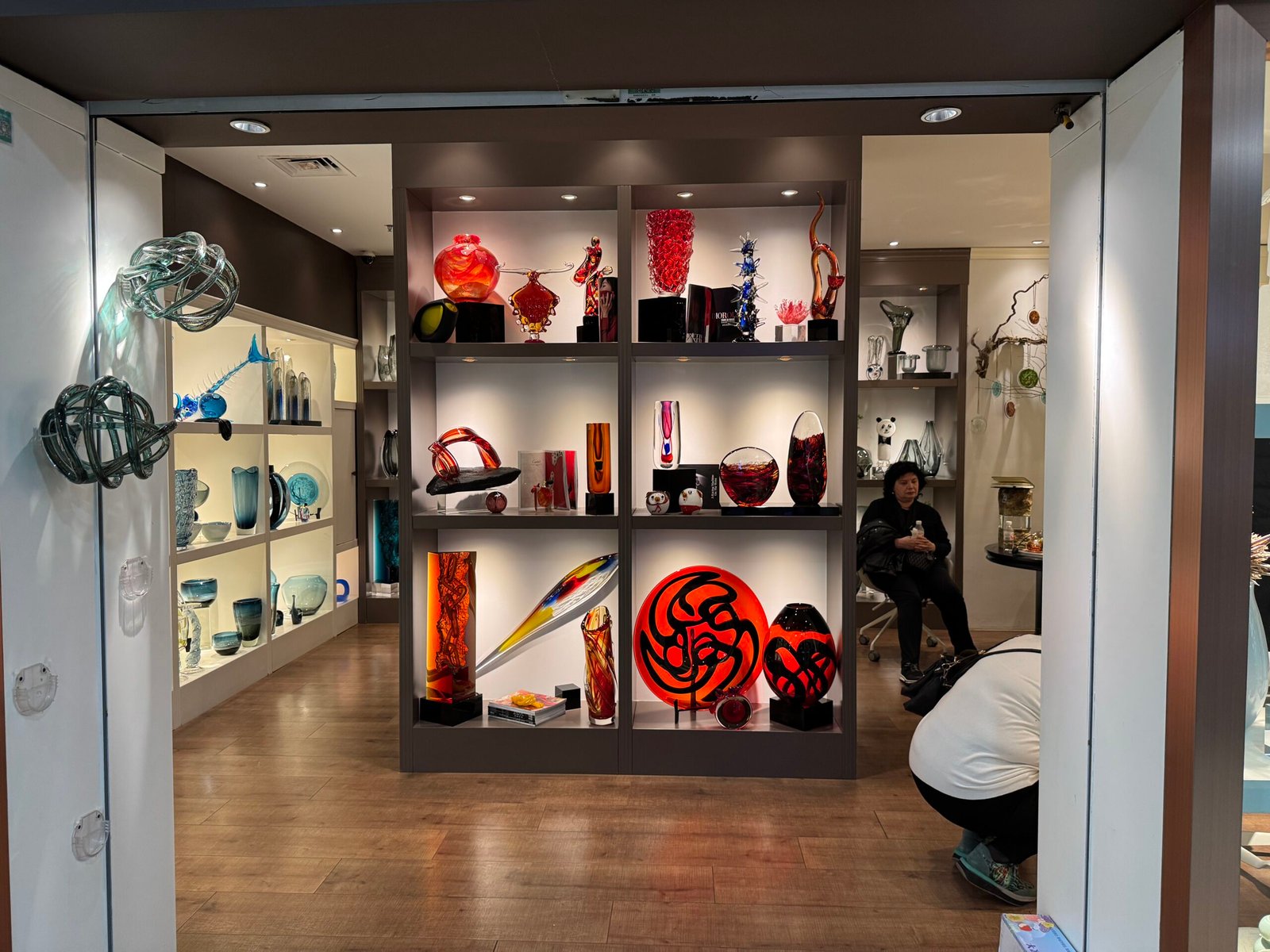
Striking red and orange art glass vases and sculptures are showcased on illuminated shelves inside a boutique at Yiwu home decor market.
Introduction:
Whether you’re a small business owner, an Amazon seller, an interior designer, or a big retailer, sourcing home décor from China can give your business a huge advantage. China is the world’s largest exporter of furniture and home decor, with nearly $87 billion in furniture exports alone. Why is China so popular for home furnishings? The answer lies in its unbeatable combination of cost, variety, and manufacturing expertise. China’s factories benefit from relatively low labor costs and highly efficient production, allowing them to produce home decor items at significantly lower prices than many Western countries. Additionally, Chinese manufacturers offer an incredible variety of products – from modern minimalist vases to traditional carved wooden screens – essentially every style of home décor you can imagine. They are also very open to customization and private labeling; you can often tweak designs, request different materials or finishes, and have your logo or packaging tailored to your brand. With decades of experience in export, China’s supply chain has matured to serve buyers of all sizes – whether you need a single container of goods or a small mixed batch, there’s a solution for you. In this article, we’ll walk through how to buy home decor from China, covering where to find suppliers, how to vet them, tips on handling orders and quality, and how to handle shipping and customs. By the end, you should have a clear roadmap to confidently start importing home décor items from China for your business.
Finding Home Decor Suppliers in China
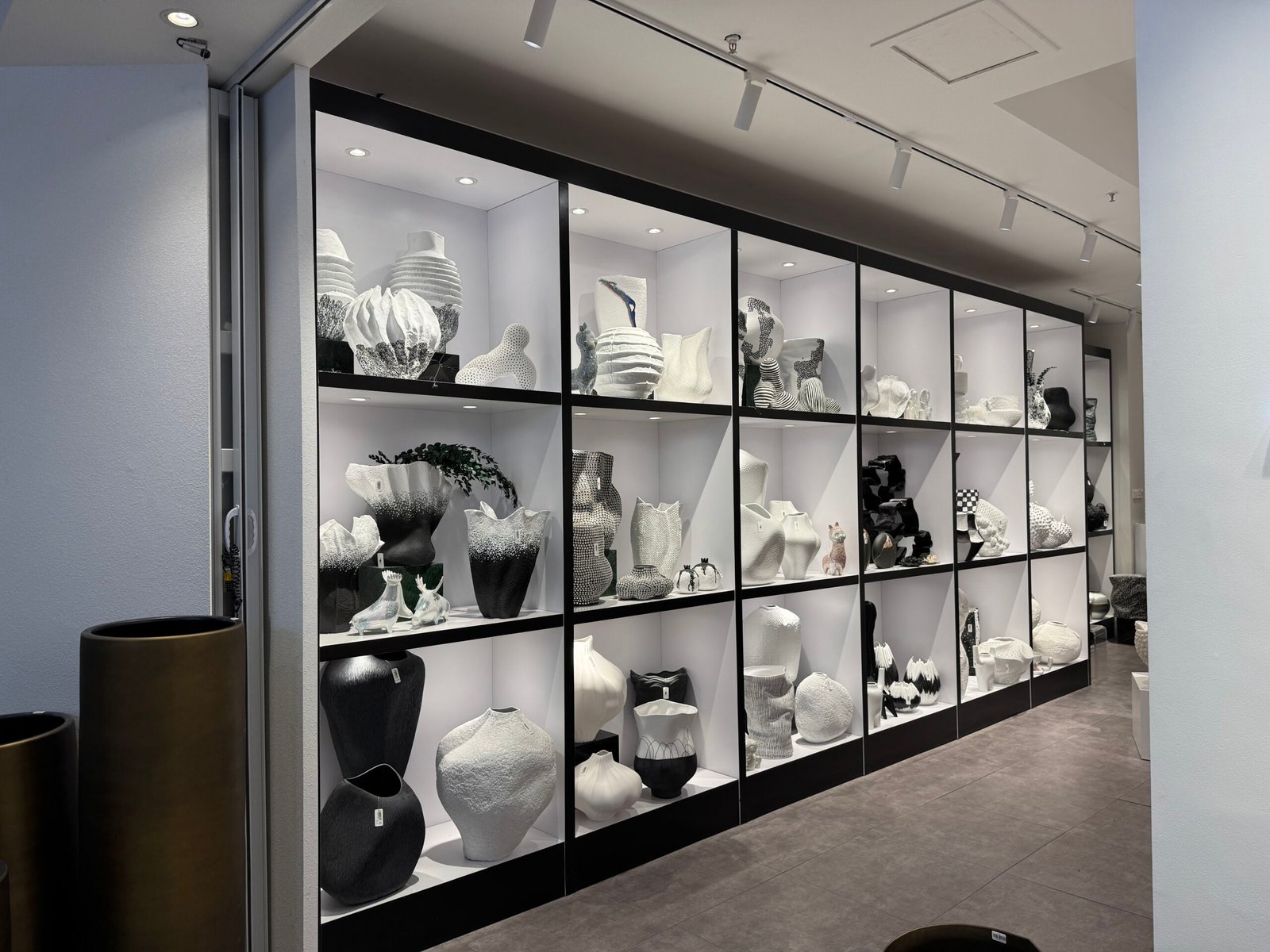
Minimal shelves of modern black and white ceramic vases and sculptures inside a pottery shop at Yiwu home decor market, perfect for contemporary interior styling.
- Online B2B Marketplaces: The easiest way to start searching for home decor suppliers is through online B2B platforms. Alibaba.com is the most famous option – it’s one of the world’s largest B2B marketplaces, listing thousands of Chinese suppliers for almost every product category. On Alibaba, you can search for specific home décor items and filter results by filters like supplier location, minimum order quantity, price range, and certifications. Supplier pages show product details, pricing, MOQs (Minimum Order Quantities), and often include reviews or ratings from other buyers. Other reputable platforms include Made-in-China.com and Global Sources. Made-in-China, for example, emphasizes verified manufacturers and has a clear interface for communication. Global Sources works mainly with professional buyers and often features higher-end decor and furnishings. If you can read Chinese or work with an agent, there’s also 1688.com (the domestic version of Alibaba) which can have even lower factory prices, though it’s geared toward the Chinese market. Using these platforms, you can gather quotations from multiple suppliers quickly. Be sure to look for indicators like “Gold Supplier” status or Trade Assurance on Alibaba, which provide some level of vetting or protection. Always communicate clearly via the platform’s messaging system, and consider having a video call or requesting product photos/videos to get a better sense of the supplier and product before proceeding.
- Trade Fairs and Exhibitions: For a more hands-on approach, visiting trade shows in China can be incredibly valuable. The Canton Fair (China Import and Export Fair in Guangzhou) is China’s largest trade fair, held twice a year (spring and autumn) and featuring thousands of exhibitors across all industries. In the home decor and furniture sections of Canton Fair, you can find everything from furniture to lighting to decorative accessories, all under one roof. Walking the fair allows you to see and touch product samples directly, meet suppliers face-to-face, and compare offerings in real time. This direct interaction often makes communication easier and lets you negotiate deals or terms on the spot. Another big event is the China International Furniture Fair (CIFF), which is held in Guangzhou (focused on home furniture) and Shanghai (focused on office and commercial furniture). CIFF, held annually, is one of the premier exhibitions for furniture and home accessories. There are also specialized trade shows for home decor, gifts, and textiles in cities like Shanghai, Shenzhen, and Hong Kong throughout the year. For example, the China (Shanghai) International Import Expo or the Hong Kong Houseware Fair feature global exhibitors including Chinese suppliers of home goods. Attending these fairs requires travel and planning (ensure you get a Chinese visa and perhaps a translator if needed), but the benefit is a comprehensive survey of suppliers and trends in one trip. If travel isn’t possible, some fairs (including Canton Fair) now offer virtual attendance or online showcases. And remember, many suppliers you meet at fairs will have showrooms or factories you can visit while you’re in China – a great next step to deepen the relationship.
- Wholesale Markets (Yiwu and Beyond): China is famous for its massive wholesale markets dedicated to various goods. The Yiwu International Trade City in Yiwu, Zhejiang is especially noteworthy for home decor buyers. In fact, Yiwu is home to the world’s largest wholesale market for small commodities (everyday goods). Think of it as a permanent, year-round trade fair. You will find thousands of vendors in Yiwu offering an endless array of home décor products: artificial plants, ceramic vases, glass crafts, photo frames, wall art, holiday ornaments, you name it. There are five sprawling districts in the Yiwu market, each with multiple floors divided by product category. The scale is mind-boggling – by some counts, over 75,000 booths and 2.1 million products are on display at any given time. Yiwu is often called the “showroom of China” – if China is the factory of the world, then Yiwu is where you can see much of that factory output in one place. The advantages of sourcing in Yiwu include the ability to source many different items in one trip and often purchase in smaller quantities per item. Vendors there are used to dealing with global buyers who want a variety of goods in one shipment. MOQs in Yiwu are typically very flexible – sometimes you can buy as few as a carton of each item (or even mixed colors in one carton), especially for simpler decorations. Prices are generally competitive (often wholesale pricing are for export). However, note that many Yiwu vendors are traders or small factories; not all vendors speak fluent English. It’s common for international buyers to use a Yiwu sourcing agent to help browse the market. The agent can guide you to reputable stalls, help translate/negotiate, and later arrange the shipping and export of your goods (since a typical Yiwu purchase might involve products from dozens of different vendors, agents also help consolidate shipments). Yiwu isn’t the only market: for example, Foshan in Guangdong has a huge furniture wholesale market (Louvre Furniture Mall, Shunde district), Zhongshan (Guzhen) is famous for lighting fixtures markets, and Shenzhen and Guangzhou have large electronics and homewares markets. But for general home décor items and small decorative goods, Yiwu is unparalleled. If you can’t visit in person, some agents offer remote purchasing services – you provide ideas of what you’re looking for, and they’ll send you catalogs or even video call from the market to show you products.
- Sourcing Agents: If the process of finding suppliers sounds overwhelming – or if you simply don’t have the time to manage all the details – consider hiring a China sourcing agent. A sourcing agent acts as your representative in China to find and contact with suppliers on your behalf. Good sourcing companies will handle everything from supplier research and price negotiation to quality control and logistics. For example, a sourcing agent can help identify reliable factories, negotiate lower prices or MOQs with their local knowledge, verify the supplier’s legitimacy (visiting the factory, checking licenses), oversee production quality inspections, and coordinate shipping/export paperwork. This service comes at a cost (usually a commission or fee structure), but it can be well worth it, especially if you’re new to importing. Agents are particularly helpful if you have a complex or custom product, or if you plan to source a wide range of items (they can save you from the headache of dealing with dozens of different suppliers). When choosing a sourcing agent, look for those with good reviews or references, and expertise in home decor or your specific product category. Many sourcing companies are based in manufacturing hubs like Shenzhen, Guangzhou, or Yiwu, but they can assist with suppliers all across China. Essentially, a trusted sourcing agent becomes your partner on the ground, ensuring you get exactly what you want with less risk and hassle in the process of buying from China.
Working with Chinese Home Decorations Suppliers: Key Steps and Considerations
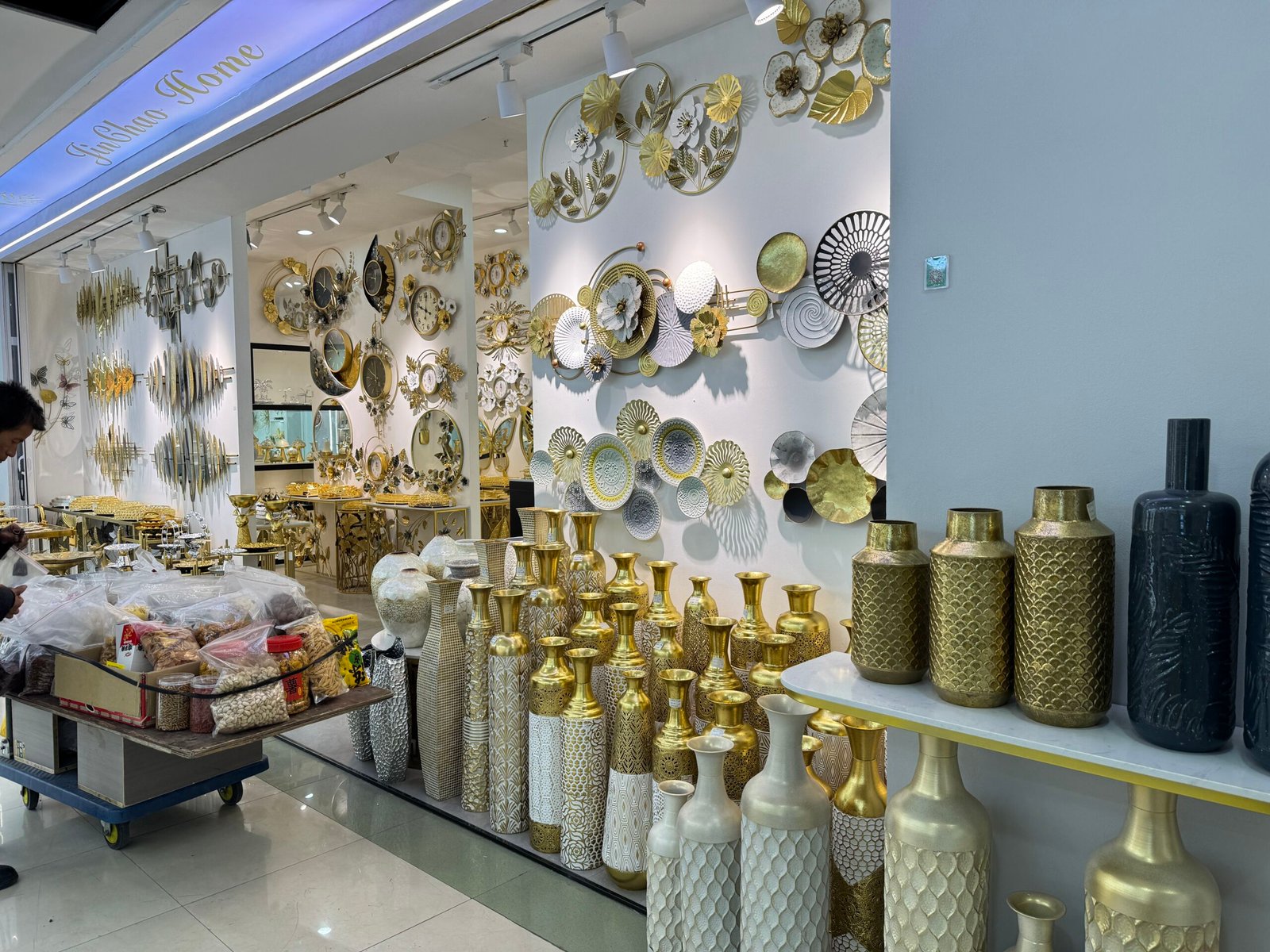
The Fashion Home store in Yiwu home decor market showcases rows of gold vases and shimmering metal wall art for glamorous interior styling.
Once you’ve identified some potential suppliers (whether through an online search or a trade fair meeting), it’s time to engage with them and move toward placing an order. This stage requires due diligence and clear communication. Here are the key steps and considerations:
- Verify Supplier Credentials: Before you get too deep into discussions, verify that the supplier is legitimate and capable. If you found them on Alibaba or a similar platform, check their profile: How long have they been in business? Do they have a high transaction volume and good ratings? Are they marked as a verified manufacturer? Off-platform, don’t hesitate to ask the supplier for their business license or export license, which every legitimate Chinese company will have. You can also request or look up any certifications they claim to have (ISO 9001 for quality management, BSCI/SEDEX audits for social compliance, etc). A quick company background check can be done via a Google search, or using services like Panjiva or ImportYeti to see if they’ve exported to other customers (if data is available). If you’re dealing with a large order, you might even invest in a third-party factory audit – hiring an inspection company to visit the supplier’s factory and verify that it exists and has the capacity/quality level it claims. Vetting suppliers is crucial; it filters out middlemen posing as factories or any fraudulent operators. The more transparent and open a supplier is with information, the more confidence you can have.
- Communicate Clearly (Language & Culture): When you first contact a supplier, introduce yourself and your company briefly, and be clear about what products you’re interested in. It’s best to list your specific requirements in writing: for example, “We are looking for ceramic tabletop vases, about 20cm tall, matte white finish, in quantities of 500 pieces”. If you have reference photos or sketches, share them. Many Chinese sales representatives read English better than they speak it, so written communication via email or messaging is often effective. Avoid slang or very idiomatic language; keep it polite, straightforward, and professional. While many suppliers have English-speaking sales staff, remember that you might be in different time zones and there could be small language barriers. Be patient and confirm key points to avoid miscommunication. For instance, if a supplier replies “yes” to a question, sometimes it simply means they acknowledge it, not necessarily that they fully agree or understand. It’s wise to recap agreements in writing (e.g., after a call or a long chat conversation, list out the understood terms and have them confirm). If you sense any communication gaps, you can use simple translation tools or have a bilingual colleague/agent. Building a good rapport is important in Chinese business culture – friendly small talk at the start of conversations, and showing appreciation for their time, can go a long way. But above all, clarity is king: spell out product specs, packaging requirements, labeling, and any compliance needs in detail to ensure the supplier knows exactly what you want. Don’t be shy to ask a lot of questions. For example, inquire about their minimum order quantity, production capacity, and lead times up front. A professional supplier will answer these clearly. Remember to also confirm payment terms and shipping terms early (more on that below). If something doesn’t feel right in communication – e.g., evasive answers or significant delays in response – that might be a red flag about the supplier’s reliability.
- Request Samples for Evaluation: Once you’ve found a supplier that offers the product(s) you want, always order samples before a bulk purchase. This is a non-negotiable step in importing. A sample serves as a quality benchmark – it allows you to inspect the material, workmanship, finish, and packaging of the item you will finally buy in quantity. Most suppliers are very used to sample requests. Typically, you will pay for the sample (often at a higher-than-wholesale unit price) plus international shipping. It’s normal for sample shipping (via DHL/UPS) to cost more than the sample itself, but it’s money well spent. When the sample arrives, examine it carefully: Does it match the photos and description? Does it feel sturdy or well-made? If it’s a textile or cushion, are the seams straight and fabric as expected? For a ceramic or glass item, did it arrive intact (which hints at whether their packaging is good enough)? If the product has a smell (sometimes manufacturing chemicals), consider if that’s acceptable. This is the time to do any stress testing relevant to the product – e.g., try assembling a furniture piece, or actually lighting a decorative candle holder to see if it can handle the heat. Provide feedback to the supplier on any changes needed. In many cases, there may be a round or two of sampling (especially if you are customizing something). Yes, this adds a few weeks to the timeline, but it is far better to fix issues now than after you have 1,000 units in a container. Keep the approved sample as the golden reference. When you place your order, explicitly state that the bulk production must match the quality and specs of the approved sample. This sample can also be used later for your own quality inspections.
- Negotiating Price, MOQ, and Terms: When you’re satisfied with a supplier’s capability and sample quality, you’ll discuss pricing and terms for the bulk order. Chinese suppliers expect some negotiation – it’s built into the culture of trading. However, keep negotiations reasonable; extremely pushing down the price might result in a lower quality product or the supplier losing interest. Start by confirming the unit price at your desired order quantity. Often, suppliers will quote tiered pricing (e.g., $5 each for 500 units, $4.50 each for 1000 units, etc.). If their MOQ is higher than you can manage (say they require 1000 units but you only want 500), don’t be afraid to discuss it – in many cases they might accept a smaller order at a slightly higher price, or you could agree to meet somewhere in the middle. Leverage the fact that China’s manufacturing is geared to scale: ordering in larger quantities usually brings the price per unit down significantly because of economies of scale. If you have the budget and confidence to sell the products, it often pays to order more upfront to get a better price. Aside from price and quantity, clarify the payment terms. A common structure is 30% deposit, 70% balance when the goods are ready to ship (or against the Bill of Lading). This split payment protects both parties to an extent: the supplier gets some upfront money to start production, and you hold the remainder until goods are produced. For new suppliers, you might want more security: one option is using Alibaba Trade Assurance or an escrow service, which holds your payment and only releases it to the supplier upon delivery confirmation. For very large orders, Letters of Credit (L/C) are also used – these are bank-guaranteed payments that the supplier can draw on once they fulfill the conditions (like delivering the goods with proper documents). While L/Cs offer strong protection, they can be complex and are usually only worth it for high-dollar transactions. Additionally, confirm the production lead time and make sure it aligns with your needs. If you need the items by a certain date (say, before the holiday season), communicate that and write it into the order contract. Standard production lead times can range from a couple of weeks to 60+ days depending on the product’s complexity and the factory’s workload. Always build in a buffer beyond the promised lead time, just in case. It’s also wise to ask the supplier about any upcoming holidays or shutdowns that could affect timing – Chinese New Year, for instance, will add a significant delay if your order falls around January/February.
- Ensuring Proper Packaging for Fragile Home Decor Items: Many home décor pieces are inherently fragile – think of glass vases, ceramic figurines, mirrors, or delicate lighting fixtures. These items can easily crack or shatter if mishandled, so robust packaging is a must when sourcing from China. Chinese suppliers are experienced in exporting fragile goods and typically use extra protective packaging to keep items safe in transit. In fact, common home décor materials like glass and ceramics, as well as mirrors and artwork, are prime examples of products that require special care when packing.
Common Packaging Methods: To prevent damage, suppliers generally pack items with a combination of protective materials and techniques. Some common packaging types for fragile home décor include:- Bubble wrap: Thick layers of bubble wrap provide a cushioning air-filled barrier around breakables, absorbing shocks and vibration during shipping. Fragile items (e.g. glassware or porcelain) are often wrapped in multiple bubble-wrap layers to minimize the risk of impact damage.
- Foam inserts: Custom-cut foam pieces or foam sheets are used to cradle items inside the box, filling empty space and absorbing impact from all sides. Foam corners or molded foam trays might be added around particularly delicate parts (like lamp bases or picture frame edges) for extra shock absorption.
- Double-corrugated cartons: Sturdy double-wall corrugated cardboard boxes (5-ply export cartons) are the standard outer packaging for fragile goods. These heavy-duty cartons resist crushing and punctures, providing a strong outer shell for your products. Many buyers insist on double-wall (or even triple-wall) cartons as a minimum for international shipments to ensure the box won’t collapse under pressure.
- Inner boxes (double boxing): Suppliers may pack each item in its own inner box before placing them into the outer shipping carton. This box-in-box method adds an extra layer of protection – if the outer carton gets dented, the inner boxes help shield the individual products. For example, a ceramic figurine might be first packed in a small cardboard box with padding, and then several of those go into the master carton. This double-boxing greatly reduces the chance of any single item being directly exposed to drops or knocks.
- Shrink wrap & pallet wrap: Plastic shrink wrap (or stretch film) is often used to secure items and bundles. Individual boxes might be shrink-wrapped to keep parts from shifting, and palletized shipments are wrapped in plastic to hold cartons together and guard against dust or moisture. While shrink wrap doesn’t cushion the item, it adds stability and keeps the package intact through long journeys. (It’s also common for suppliers to shrink-wrap sets of products or attach protective plastic film on mirrored or glass surfaces to prevent scratches.)
Using these packaging materials in combination (for instance, foam plus bubble wrap inside a double-corrugated box) greatly improves the chances that your décor products will arrive intactly. However, don’t assume every supplier will automatically pack to the highest standard – it’s important to communicate your packaging expectations clearly.
Discuss Packaging Requirements with Your Supplier: When working with Chinese suppliers, be explicit about how you want fragile items packed. Start the conversation early on, and let the supplier know that safe packaging is a top priority for you. For example, you can request that the factory use packaging that is “drop-test ready,” meaning it can withstand rough handling and falls without damage. Many importers even arrange a formal carton drop test (based on ISTA standards) during quality inspection to verify the packaging’s durability. It’s wise to ask your supplier if they can perform or have passed such drop tests for the packaged goods – this signals that you expect packaging capable of surviving real-world shipping conditions.
Additionally, specify the packaging configuration in detail. If you want each item individually boxed or wrapped, say so clearly – ask for inner boxes or foam padding around each piece inside the master carton. Clarify the outer carton specs as well: for instance, insist on new double-wall corrugated cartons of appropriate size, with reinforced corners and proper sealing tape. You might explain that the boxes should endure a long transit (factory to port, ocean freight, trucking, warehousing, and final delivery) without crushing or falling apart. If you have particular standards (like a maximum weight per carton or adding “Fragile” labels on all sides), communicate those requirements in writing to the supplier.
The key is to be proactive and specific. Don’t hesitate to tell your supplier exactly what “good packaging” means to you – never assume they’ll use the best materials by default. Chinese suppliers work with various buyers, so providing your own standards helps avoid any misinterpretation. By making it clear that you expect drop-tested, secure packaging and by requesting photos or samples of the packed products, you can ensure your supplier packs your home décor items to a high standard. This extra step in communication gives you peace of mind and significantly reduces the chances of unpleasant surprises (like broken products on arrival). In short, taking the time to discuss packaging is well worth it when importing fragile home décor from China – it protects your goods and your business reputation. - Placing the Order (Purchase Contract): Now that you’ve settled the details, it’s time to place your order. It’s good practice to prepare a Purchase Order (PO) or written sales contract that lists all the agreed terms. This document should include: product details (item model or description with specifications), unit price and total price, quantity, packaging requirements, payment terms, agreed lead time (shipment date), and shipping terms (e.g., FOB Shanghai, CIF Los Angeles, etc.). If you have agreed on any late fees for late delivery or specific quality requirements, include those too. Many suppliers will have their own proforma invoice or contract format – review it carefully to ensure it matches what you agreed on, and don’t hesitate to request changes if something is off. While a contract is only as enforceable as the goodwill and practicality allow (taking legal action overseas is usually not feasible for small/medium deals), having everything in writing sets the right expectations. It also helps avoid “I thought you meant X, not Y” type issues later. Once both parties sign/stamp the contract, you’ll typically pay the deposit to kick off production. At this stage, maintain communication. Ask for updates during production – a common milestone is to get a photo of the first assembled product off the line, or to even do a mid-production check if it’s a large order. Some buyers request a pre-shipment sample (also called a production sample), which is a sample of the product taken from the first batch of mass production, to double-check everything is as it should be. This can give you peace of mind if there were modifications after the initial sample. Keep in mind that any changes after mass production starts can be costly or impossible, so hammer out details beforehand. If your product has logos or branding, make sure the supplier provides proofs of how the logo looks on the item or the packaging. Approve the artwork layout files before they proceed to print/engrave. Essentially, during production your job is to monitor and maintain a good relationship. Suppliers appreciate buyers who stay in touch but aren’t too pushy – a friendly message asking “How is everything going? Can we see a photo of the items being produced?” is fine. If you have a large order or sensitive timeline, consider hiring a third-party inspection service for during or post-production (more on quality control next).
- Quality Control (Inspection) Prior to Shipment: One of the biggest risks in international sourcing is that you receive goods that are defective or not as described. That’s why having a quality control (QC) step before the goods leave China is so important. There are a few ways to do this. If you or a trusted member of your team can be in China, you could personally visit the factory to do a final inspection. If not, a very common approach is to use a third-party inspection company. Firms like SGS, Bureau Veritas, Intertek, QIMA (formerly AsiaInspection) and many others specialize in product inspections for a few hundred dollars per inspection. You schedule an inspection when production is ~100% complete (and ideally with the goods packed or at least bulk packaged). The inspector will go to the factory, use a sampling method (e.g., randomly check X number of units per batch), and verify things like: Does the product match the approved sample and specs? Do the functions work (if any)? Are the dimensions and colors correct? They will also check for appearance defects, packaging quality, and carton labeling. Afterward, they provide a detailed report with pictures. You can specify to the inspection company what tests or checkpoints are important to you – for example, for a lighting décor item, you might have them to test 100% of units for power and light function; for a ceramic vase, you might want a certain number of drop-tests of the packaging. If the inspection passes, you can breathe easy. If it fails due to major issues, you can ask the supplier to rework or sort out the defects (and perhaps do a re-inspection). Doing this before the goods ship is crucial, because once they are in your country, the supplier has much less reason and it’s much harder to fix problems. A good QC process – from specifying your requirements clearly, to sampling, to final inspection – greatly reduces the chance of unwelcome surprises. Also, be aware of quality fade – a rare problem where a supplier might deliver good quality in the first order and then slowly start cutting corners in subsequent orders. Consistent inspections or at least spot-checks help keep everyone honest. Many experienced importers will even write into contracts that final payment is made only if the goods pass a quality inspection. As an importer, you should also be clear on what level of quality is acceptable. Minor imperfections (a small scratch or slight color variation on a handcrafted item, for example) might be okay if they don’t affect how easy it is to sell the product. But critical defects (anything that makes the product unusable or unsafe) must be zero accepted. Communicate these standards or testing requirements to your supplier early – for instance, “glasses must withstand hot water without cracking” or “candle paint must be non-toxic per X standard” or “wood frames should be smoothly sanded without splinters”. The more you define, the easier it is to hold the supplier accountable. Lastly, ensure that packaging and labeling meet your requirements: if you need barcodes on each item or special shipping marks on cartons, confirm those are in place and correct. It’s wise to have the inspector check packaging thoroughly, especially for fragile items: the inspector can do drop tests or stacking tests to verify that the packaging will protect the goods in transit. Many home decor items like ceramics or glass are fragile, so insist on good enough inner packing (bubble wrap, foam, etc.). You don’t want to receive a pallet of broken picture frames or chipped mugs.
- Shipping and Logistics: With production finished and quality approved, the next step is getting your goods from the factory in China to your location. Here’s a breakdown of shipping options and tips:
- Shipping Methods: As mentioned earlier, you have Courier, Air Freight, or Sea Freight as the main choices. For most small shipments (generally under 200-300 kg) that are needed quickly, international courier services (DHL, FedEx, UPS, etc.) are very convenient – they handle customs clearance and deliver right to your door, usually within a week or less. The downside is cost; couriers charge by weight/volume and can be expensive, which can eat into your profit if the goods are heavy or low-value. Air freight (by commercial airline cargo) is the middle option – you’ll need to work with a freight forwarder for this. The goods will fly to your nearest international airport, then you (or your customs broker) handle clearing them and trucking them to your warehouse. Air freight is charged by gross weight or volumetric weight (whichever is greater), and is much cheaper per kilo than courier, but expect about 7–14 days transit including export and import processes. Sea freight is the go-to for large shipments (usually anything above 1-2 cubic meters becomes cost-effective to send by sea). Sea shipping is slow – typically 3 to 5 weeks port-to-port, plus time for customs clearance – but the cost per unit can be pennies if you are shipping a full container. You can ship FCL (Full Container Load), which means you get a whole container (common sizes are 20-foot and 40-foot containers), or LCL (Less than Container Load) where your goods share a container with other customers’ cargo. LCL is useful if you can’t fill a container; you just pay for the volume you ship. However, with LCL there’s a bit more risk of damage or delay because your shipment gets consolidated/deconsolidated with others. Regardless of which shipping method you select, working with a reliable freight forwarder is highly recommended. The forwarder can handle booking space on a vessel or plane, preparing export documentation, customs filing, etc. Many sourcing agents also offer logistics services or can refer you to a good forwarder. You can also compare quotes from global freight companies or platforms like Freightos.
- Shipping Terms (Incoterms): Make sure you understand what terms you are buying under. If a price is quoted FOB (Free On Board), that means the supplier will get the goods onto the ship (or plane) at the port of export, and from that point onward, it’s your responsibility/cost. FOB is common and works well if you have a forwarder. If you don’t want to arrange shipping separately, you might ask for a CIF (Cost, Insurance, Freight) quote to your nearest port – under CIF, the supplier will handle shipping to your port and include that cost in the price. You would then handle customs clearance and trucking from the port. Some suppliers (or agents) even offer DDP (Delivered Duty Paid) service, where they ship it all the way to your door and include the customs duties in the price. This can be convenient – essentially like ordering from a domestic supplier – but usually you pay more money for this service, and not every supplier can do it. It can be worth it to simplify things for your first import, though. Always clarify incoterms to avoid confusion. If a supplier says “price includes shipping,” double-check if it’s to the port (CIF) or to your address (DDP).
- Customs and Import Clearance: Bringing goods into your country means you’ll need to clear them through customs and pay any import duties or taxes. Each product is classified under an HS code (Harmonized System code) which determines its duty rate. Home decor items can have a range of import duties – some items like wooden furniture might have a moderate duty, while ceramic decorative articles might have a lower duty, etc, depending on your country’s tariff schedule. You should research this or consult a customs broker so you’re prepared for the additional costs. You’ll also need standard documents for customs: a commercial invoice (provided by the supplier, listing the goods and value), a packing list (detailed list of cartons and contents), and a bill of lading (for sea freight) or air waybill. Often, you’ll need to fill out an import declaration form for your customs authority (your forwarder or broker usually handles this on your behalf). Ensure the supplier also provides any certificates of origin (if you need them for tariffs or trade agreements) and any product-specific certificates (for example, a fumigation certificate for natural materials, or a test report if required by regulations). One tip: if you’re unfamiliar with import procedures, it’s worth hiring a customs broker for your first few shipments. They charge a fee but they will handle the clearance, ensure taxes are paid, and troubleshoot any issues with customs. This helps you avoid costly mistakes (such as misclassifying a product or missing a required permit). Over time, you’ll get the hang of the process and can decide if you want to self-manage it or continue with a broker.
- Compliance with Regulations: Make sure that the items you import comply with any safety or certification standards in your target market. Home decor items, in general, are not as tightly regulated as, say, electronics or toys, but there are still regulations to heed. For example, if you’re importing lamps or lighting fixtures, countries like the US will require electrical safety certifications (UL or ETL in the US) and possibly energy efficiency standards; the EU would require CE marking on lighting. If you are importing textiles or cushions, there might be flammability standards or labeling requirements (fiber content labels, care labels). Products like ceramics or glassware that will be used for food use need to be lead-free and compliant with FDA regulations in the US. Holiday string lights or candles might have specific safety standards. And any product that involves paint or chemicals should comply with regulations like California’s Proposition 65 (for the presence of certain chemicals) or REACH in Europe. Always ask the supplier if they have experience exporting to your country and if their product already meets relevant standards. They may already have test reports or certificates from labs for previous orders. If not, you might need to arrange testing – there are labs in China that for a fee will test a product to your country’s standards. For packaging, many countries also have regulations (e.g., the use of treated wood pallets – China uses ISPM 15 compliant pallets for wood, which is standard). And if your product is wood or plant-based (like wicker or dried flowers), you might need phytosanitary certificates. Don’t let this scare you – for most typical home decor items (vases, decorative statues, lamps, etc.), it usually boils down to ensuring electrical items are certified and that materials are safe. A knowledgeable supplier or sourcing agent can often guide you on what’s needed. Ultimately, compliance is the importer’s responsibility, so do a bit of homework on your product category’s requirements in your country.
Avoiding Common Pitfalls
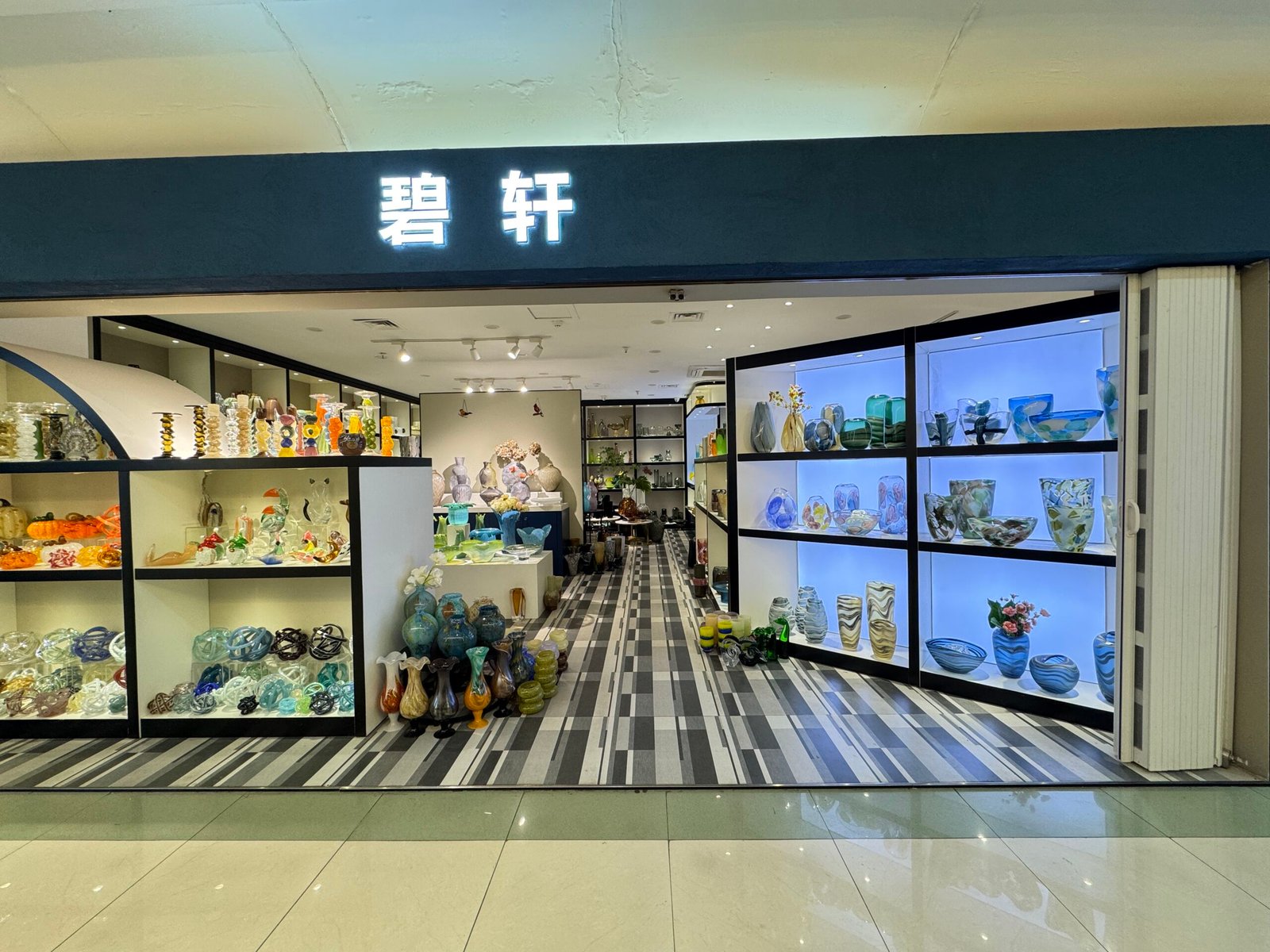
A glass store in Yiwu showcases rows of illuminated vases and bowls in Yiwu Futian Market.
Importing from China offers huge benefits but also comes with its challenges. Here are some common pitfalls in buying home décor from China and how to avoid them:
- Quality Issues and Inconsistency: Perhaps the number one concern of buyers is receiving products that don’t meet their quality expectations – e.g., paint finishes that chip off, fabrics that feel cheap, or items that break easily. These issues can arise from miscommunication or a supplier cutting corners to save cost. To protect yourself, never skip the sample approval and inspection process mentioned above. Clearly define your quality standards in the contract. For instance, if you’re buying wooden decor, specify the type of wood or grade, the sanding smoothness, the exact stain color, etc. If you’re buying ceramic, clarify the glazing and that it should be lead-free if for kitchen use. The more precise you are, the less wiggle room for the factory. Use trusted suppliers and start with smaller orders if possible to verify their quality. Taking a full quality control approach (samples, inspections, etc.) is the best strategy to ensure you get what you expect. When issues are found, address them clearly and directly with the supplier – most will cooperate to maintain your business and will correct the problems once aware. Over time, as you build a relationship, the supplier will understand your standards better, too.
- Delays in Production or Shipping: It’s not uncommon for an order to take longer than initially quoted. Perhaps the factory got a bigger order in the meantime, or a machine broke down, or a raw material shipment was late. Moreover, external factors like port congestion or customs inspections can delay the freight. Plan for buffer time in your inventory schedule. If you must have items in stock by a certain date, communicate that clearly and order well in advance. As a rule of thumb, assume things could take a few weeks longer than the “happy path” timeline. Keep in mind the Chinese holiday calendar: for example, during Chinese New Year (late Jan/Feb), virtually all factories close for at least 2 weeks and there’s a production backlog before and after the holiday. National Day Golden Week (Oct 1-7) is another holiday where some businesses close for a week. And even the Canton Fair weeks (April/May and October) can slow down some factories that participate in the fair. Knowing these, you can avoid trying to, say, place a big order right before Chinese New Year. To avoid shipping delays, stay in touch with your forwarder, get cargo ready a bit early if possible, and avoid last-minute bookings during peak season (like August-October when holiday goods from China flood the ports). Diversifying shipping routes or ports can help if one port is severely congested. While you can’t remove all uncertainty, buffer and flexibility will save you a lot of stress.
- Communication Gaps: Working across languages and cultures can lead to misunderstandings. Maybe you use the word “mint green” and the factory interprets a different shade of green because of translation. Or you expect the supplier to package items a certain way but didn’t explicitly ask, and they package differently. The solution is to over-communicate and confirm. Use simple English and bullet points for key requirements. When you get a response from the supplier, read it carefully – if anything is ambiguous, ask for clarification. It often helps to summarize key points in writing (e.g., “Just to confirm, you will use 5 layers of corrugated cardboard for the inner boxes, correct?”). Chinese suppliers generally won’t mind you spelling things out; it’s seen as being thorough. Also, be mindful of cultural differences: Chinese counterparts may not always say “no” directly even if something is difficult – they might say “maybe” or “we will try”. If you suspect hesitation, probe deeper or propose a solution. Maintaining a polite tone is important; losing your temper or being rude can backfire, as saving face is a cultural priority. If language is a serious barrier, consider hiring a translator or using a bilingual agent to facilitate important discussions. Even using simple translation apps for double-checking specific words (like material names) can be worthwhile. The good news is, in the home décor export industry, many sales reps are quite experienced with English, so you’ll often find communication is fine for routine matters. Just don’t assume – verify and confirm every critical detail.
- Scams and Fraudulent Suppliers: While the vast majority of suppliers you’ll encounter are legitimate businesses, there are a few bad apples. Red flags include: suppliers asking you to wire money to a personal account (payments should usually go to a company bank account in the company’s name in China), extremely low prices that seem too good to be true compared to others, or a supplier refusing to do video calls/factory visits or provide any credentials. To avoid scams, stick to verified suppliers on known platforms, or get referrals, and use payment methods that offer protection. Alibaba Trade Assurance, for example, will protect your order amount if the supplier fails to ship or the products are significantly not as described. If you are using a sourcing agent, a lot of this risk is mitigated as they vet suppliers for you. Also, always double-check if the person you’re communicating with actually represents the company you think you’re dealing with. For instance, there have been cases of imposters who intercept communications. Verify emails (they should ideally use the company’s official email domain, not a random Gmail, although smaller suppliers do use personal emails sometimes). If a new bank account is provided for payment, double-check with a known contact or on a phone call, as “change of bank account” frauds exist. Overall, due diligence and cautious payment practices will keep you safe. If something feels off, consider walking away – there are plenty of fish in the sea when it comes to Chinese suppliers.
- Intellectual Property (IP) Concerns: If your home décor product is a unique design that you developed, you’ll want to protect it. China has improved IP laws, but enforcement can be tricky. One strategy is to register your trademark or design patent in China if you’re going big with a product – this can stop copycats domestically. When sharing a new design with a factory, you can have them sign an NDA (Non-Disclosure Agreement), though again, its power is only as good as the relationship and willingness to enforce it. More commonly, IP issues arise if you unknowingly buy a product that infringes someone else’s IP. For instance, maybe a supplier offers you decorative figurines that actually are a replica of a designer brand’s art, or a patented mechanism. Importing such items could get you in legal trouble or have them seized at customs. To avoid this, do some homework on the product. If it’s a very distinctive design or has a logo, ensure it’s not a counterfeit of a known brand. Many Chinese suppliers create “dupe” designs inspired by popular items – generally it’s best to steer clear of anything that looks like a direct knockoff of a famous designer piece. Selling generic or private label home décor is usually fine – these are products made by factories for anyone to brand (you’ll see them sold under many different brand names globally). When in doubt, ask the supplier directly, “Is this your original design? Are there any patent issues?” While they might not always be fully transparent, their reaction can be telling. If IP is a major concern for your product, consult with an IP attorney. But for most standard home decor goods (vases, lamps, cushions, etc.), you’re usually dealing with generic designs or factory-original designs meant for mass market, which is low risk.
- After-Sales Service and Returns: Buying from overseas is not like buying from your local wholesaler – you can’t simply return a batch of 500 ceramic statues to China if you find they don’t sell or if some arrive damaged. As an importer / buyer, you have to own that risk. Chinese suppliers typically do not accept returns of unsold inventory, and they often don’t have a system for handling returns or refunds unless there was a clear quality problem. This means you should do everything possible to ensure the order is right before it ships. If you do discover a problem after receiving the goods (say, a higher defect rate than expected), a reasonable supplier will often offer some compensation on your next order (a discount or replacement for the bad pieces) as a sign of goodwill, but you likely won’t get a straight refund. So, factor this into your cost and risk calculations. It’s wise to inspect the goods upon arrival as well – open some cartons, check the items, test anything that needs testing. If you did pre-shipment inspection, there should be no big surprises, but shipping can sometimes cause issues (e.g., moisture damage if not packed properly, etc.). If everything looks good, congratulations – you’ve successfully imported your home decor product line! Now it’s up to you to market and sell these products, which is a whole other topic.
Kevin’s Final Thoughts on Buying Home Decor from China
At first, the process of buying home décor from China might seem complex – there are indeed many steps and considerations. But thousands of global buyers, from boutique online store owners to major retail chains, successfully do this every day. China’s huge network of suppliers is a treasure trove for unique, cost-effective, and customizable home décor products. The key is to approach it with the right knowledge and mindset. As we’ve outlined, that means doing your homework on suppliers, maintaining clear communication, and doing good quality control and logistical planning. If you follow these guidelines and are prepared for potential challenges, importing home decor from China is not only very doable, it can be a rewarding and profitable venture. On the flip side, if you rush in without due diligence, it could become stressful – so take it step by step. Leverage resources like online platforms, sourcing agents, and freight forwarders to make the journey smoother. In the end, you may find that the benefits – significant cost savings, a diverse product selection, and the ability to differentiate your brand – outweigh the hassles. Many successful businesses have been built on products sourced from China’s factories and markets. With careful planning, your business can be one of them. Here’s to your success in sourcing and selling wonderful home décor items – and perhaps even taking a trip to China one day to shake hands with your supplier and see the production in person. Happy sourcing!
If you have any questions about sourcing Home Decor from Yiwu Market or China, or if you’d like professional assistance to make your buying process easier, we’re here for you. Feel free to reach out – whether you need a trustworthy agent on the ground, guidance on shipping options, or just someone to talk through your product ideas with, we’re happy to help. Sourcing can be complex, but you don’t have to do it alone. Contact us anytime for friendly advice or support on making your China sourcing journey a smooth success.
Contact Information as below:
Email:kevin@china-buying-support.com
Phone | WhatsApp:+86 1860 5899 103
Thank you.
Joining Us With 1,200+ Happy Clients Enjoying Buying From China now!
Becoming One of China-Buying-Support family to Get a Easier and Trouble-Free Sourcing and Shipping Service.